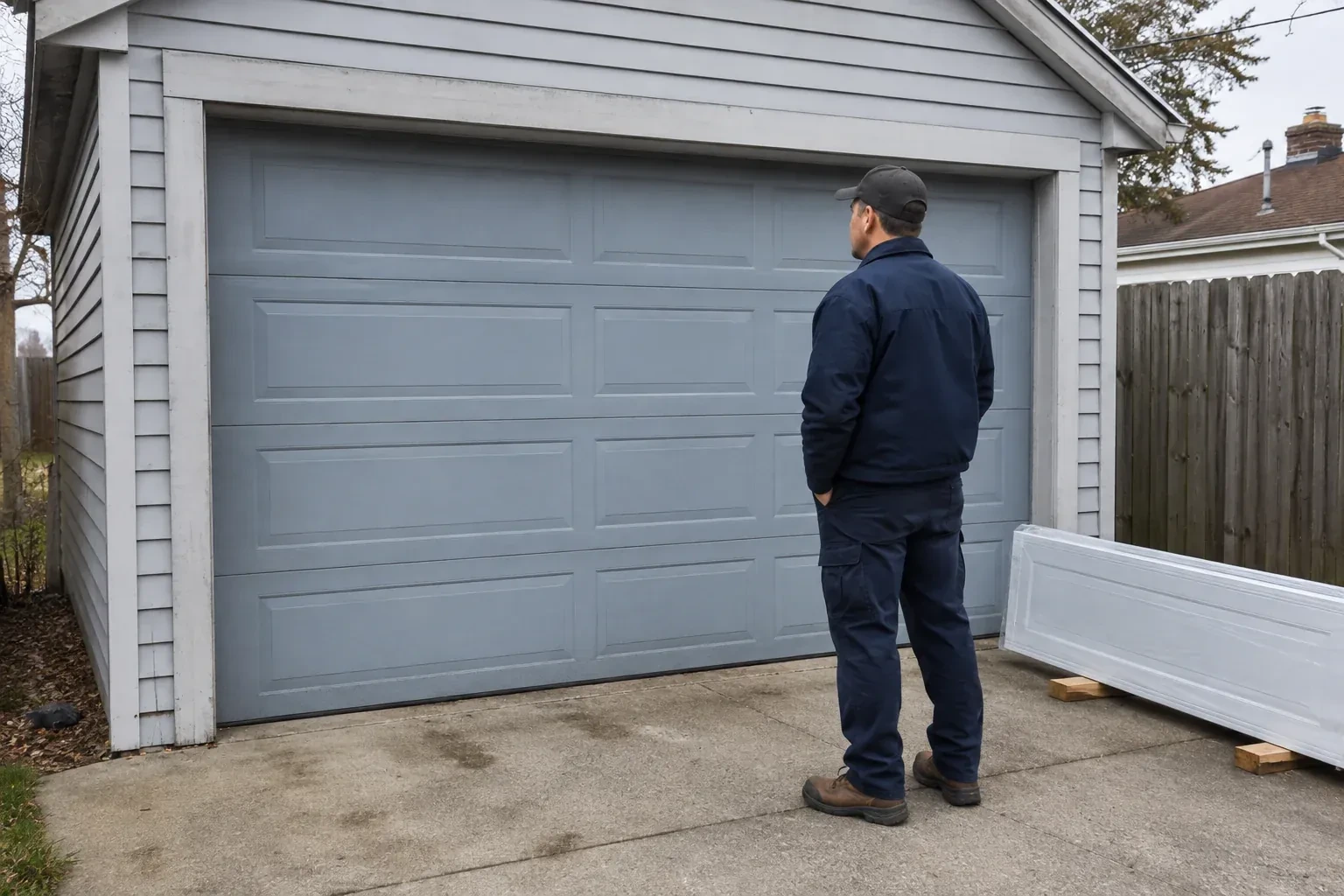
Sound familiar?Toronto
- The call
- This garage will be heated and used beyond parking, so the opening needs more than a basic closure. Insulated sections, perimeter seals and careful contact at the finished floor matter from the first installation.
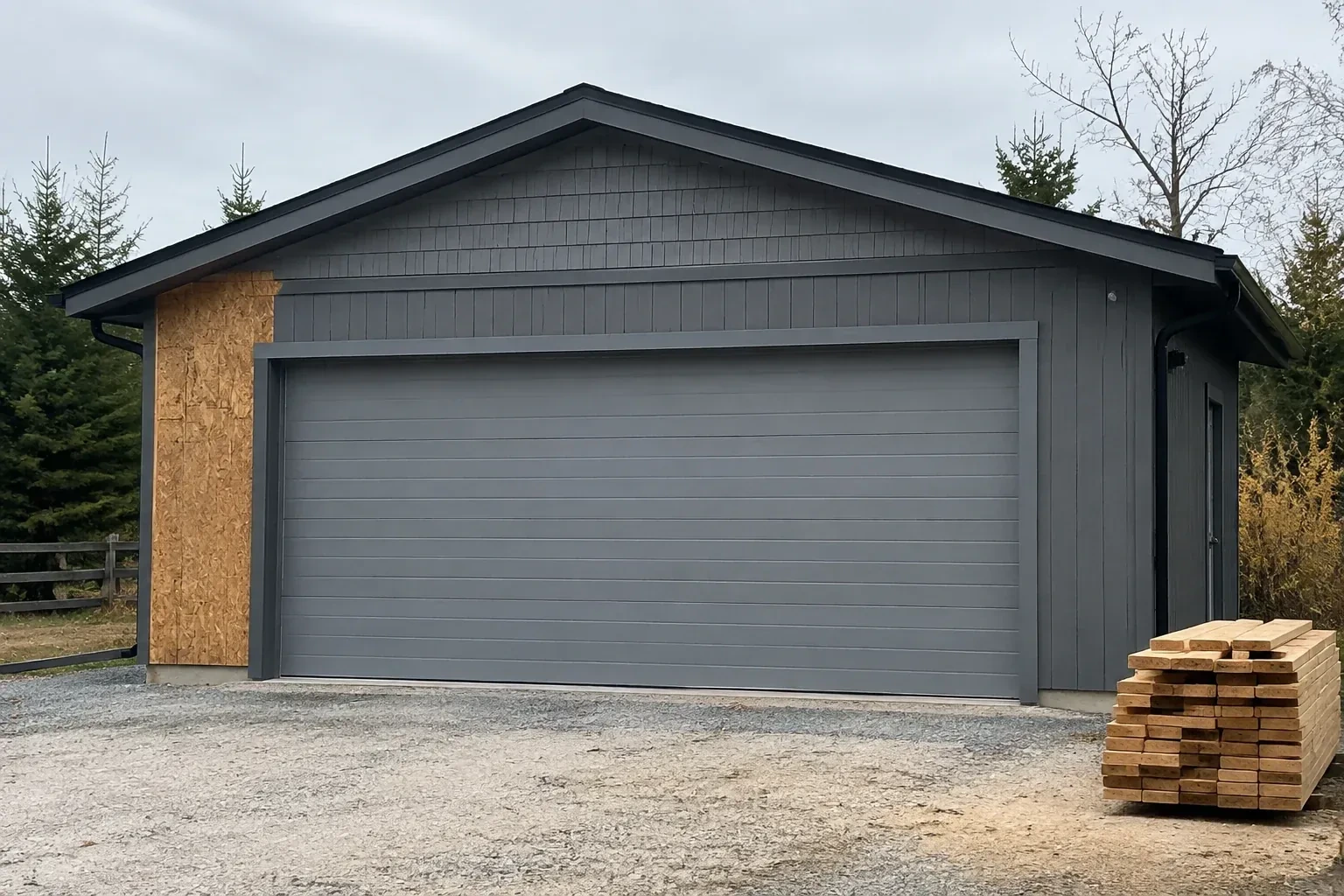
The build is nearing handover and the garage still needs its main moving component. A balanced door, fitted seals, working controls and a clear set of operating instructions will complete the opening for everyday use.
A successful installation begins before the door arrives. Drawings and selections are compared with field measurements, including finished floor elevation, cladding thickness, ceiling obstructions and the support available at the jambs and header. This check keeps the chosen section design, track layout and spring system connected to the building that will carry them. Once the site is ready, the complete assembly is fitted, aligned and balanced, then documented for the owner and other project trades.
Sound familiar?Toronto
New-Construction Garage Door Installation · Toronto
Scene 1
The bottom seal can only follow the surface beneath it, so final floor conditions matter. The installer checks whether the slab is complete, where its high and low points sit, and how the interior floor meets the exterior approach. Drainage slope, coatings and planned finishes are discussed if they will change the landing elevation. This establishes the opening height and shows whether the seal can make even contact across the width. It also prevents a temporary construction surface from becoming the permanent reference for door position and travel limits.
Scene 2
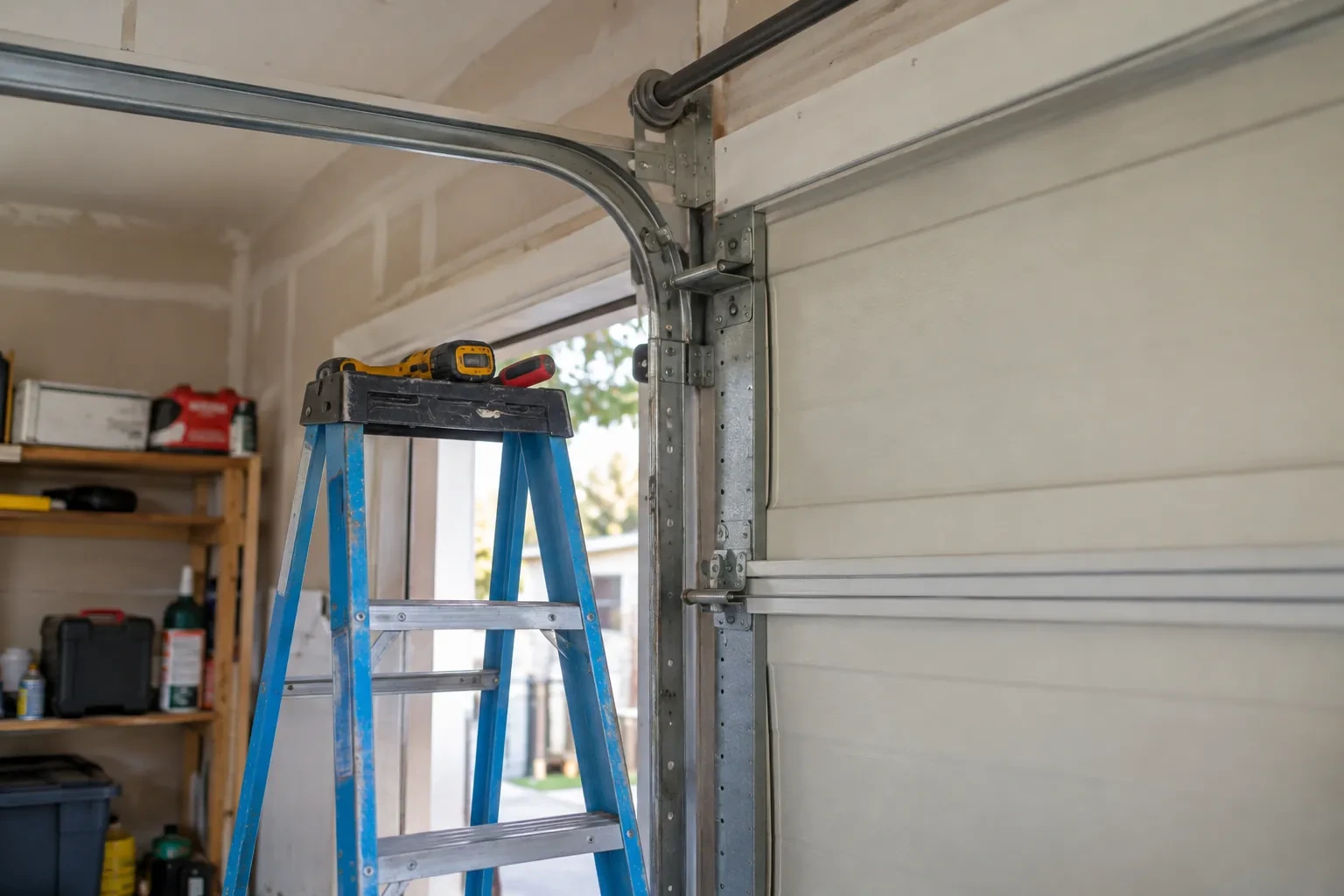
An operator is introduced only after manual movement has been assessed. Its rail or shaft connection is mounted to suitable supports, aligned with the door and joined to the reinforced attachment point specified for the top section. The wall control and photoelectric sensors are installed in their planned positions, with wiring kept clear of moving hardware. Travel limits and operating force are set from the product instructions. Several complete cycles confirm that the powered system follows the door's path smoothly before reversal and entrapment-protection functions are tested.
Scene 3
For the builder, completion means the opening, installed door and remaining trade responsibilities are clearly separated. The garage door has been assembled, supported, balanced, sealed and tested within its agreed scope. Items such as final electrical connection, exterior caulking, cladding touch-ups or floor finishing are listed only when they remain elsewhere in the project. This closeout gives the next trade a clean starting point and gives the owner a system that has already been demonstrated. It also keeps later cosmetic work from being mistaken for incomplete door installation.
What shapes the quoteRouge Valley Garage Door Co.
FeesSame any hour
Follow the door and operator manuals for inspection and product-specific lubrication. Owners can keep the opening and sensor path clear, clean the section finish gently and watch visible cables, rollers, hinges and seals for change. Tracks are guides, so adding heavy grease can collect dirt. Any shift in balance, smooth movement or cable condition is useful reason to arrange a professional system assessment.
Keep the door and operator manuals, model or component identification, approved selections and any relevant drawings with the building records. The closeout note can include door size, track arrangement, counterbalance type, controls and completed commissioning checks. Private access codes remain with the owner rather than in a general service file. These records make future maintenance and compatible part identification much more straightforward.
A rough opening is the framed construction opening before its final jamb surfaces, cladding returns or other finishes are applied. The finished opening is the clear width and height the installed door actually closes against. Door sizing and seal position rely on that final geometry. Reviewing both helps the project team place framing correctly while preventing finish thickness from quietly reducing the space reserved for the selected door.
TorontoOntario
New-Construction Garage Door Installation · Agincourt, Agincourt North, Clarks Corners, Sullivan, Tam O'Shanter
Every square is one home in a hundred.
On-site assessment
The build is nearing handover and the garage still needs its main moving component.
(289) 806-3304, open 24/7.
On-site assessment preferred · (289) 806-3304, open 24/7