Skip to content
RougeValley Garage Door Co.Open 24/7 (289) 806-3304
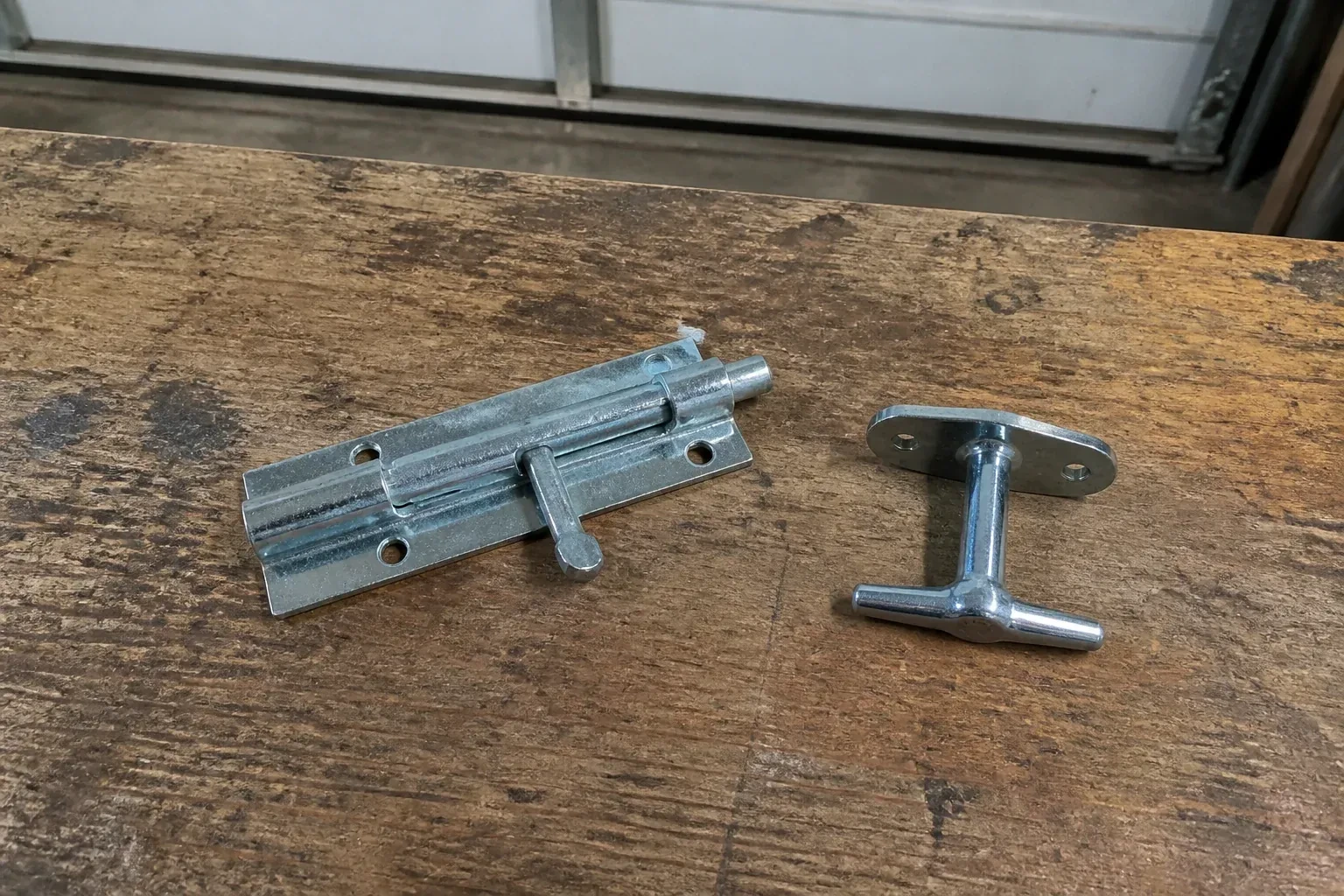
Detached slide bolt and T-handle on a wooden garage workbench. — Garage Door Manual Lock Repair, Toronto

Repairs · Toronto

Garage Door Manual Lock Repair

On the old wooden door out back, one lock bar hangs loose from a rusted guide and the other is bent at an angle, so the handle turns but the door can still be lifted a hand's width from outside.

In plain words

A sectional garage door is usually locked in one of two ways. An inside slide bolt on the door's edge shoots sideways into a slot cut in the vertical track. An outside keyed T-handle or L-handle turns a centre mechanism that throws a bar into each track, or on some models pulls a cable to release spring latches instead. Manual lock repair puts either arrangement back into service: the technician confirms the door closes fully and sits square, then frees, adjusts or replaces the bars, guides, lock body, handle or cylinder, and tests that the lock holds firmly and, just as important, clears the track completely when it is released.

Sound familiar?Toronto

The call
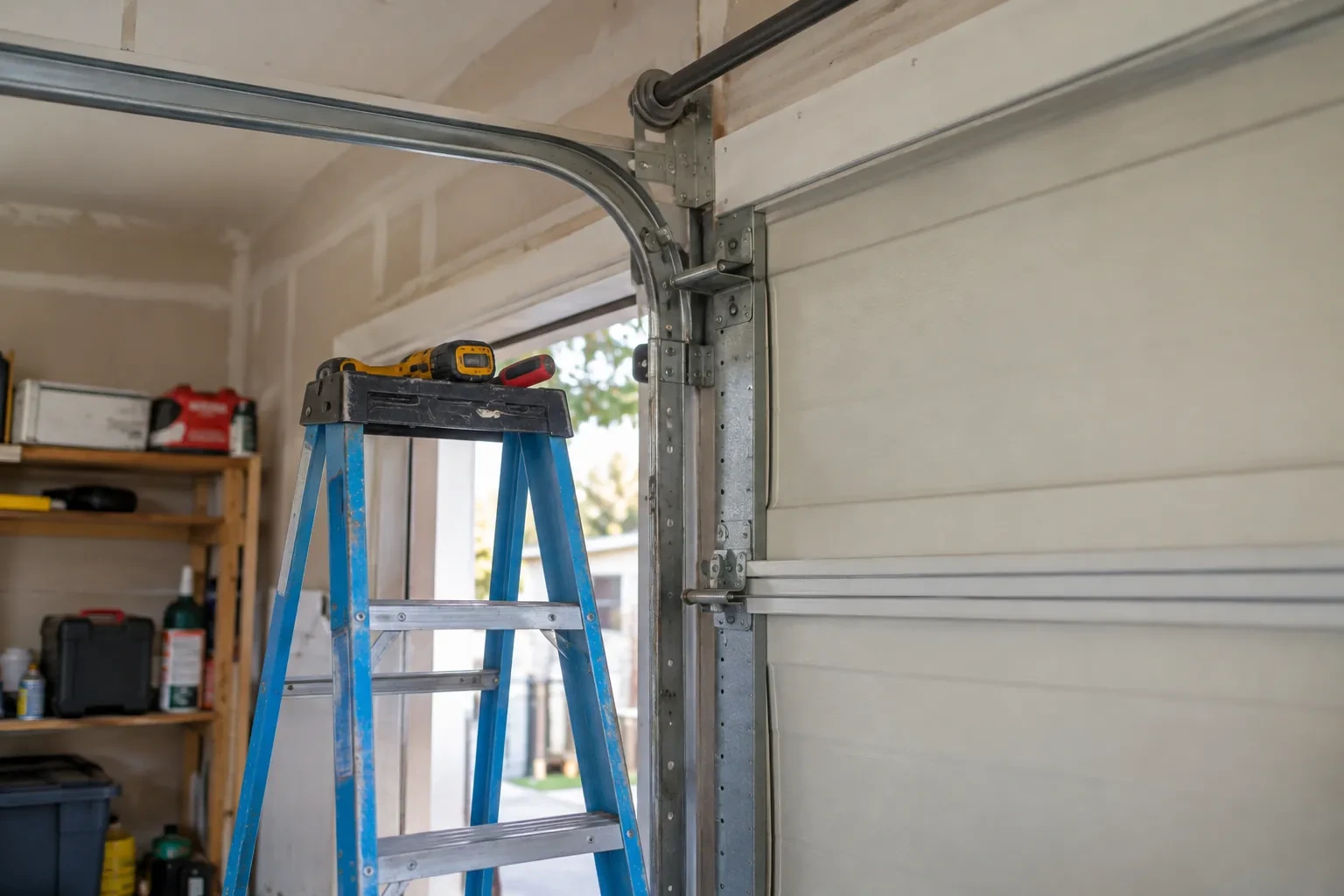
You pushed the slide bolt across like always, but tonight it stops short of the slot in the track and springs back. The door is down, the bottom seal is on the concrete, yet the bar and its hole are a finger's width apart.
NextHow the visit goes

Garage Door Manual Lock Repair · Toronto

How the visit goes

Illustrative garage doors scene
  1. Scene 1

    Handle, spindle and the mechanism behind them

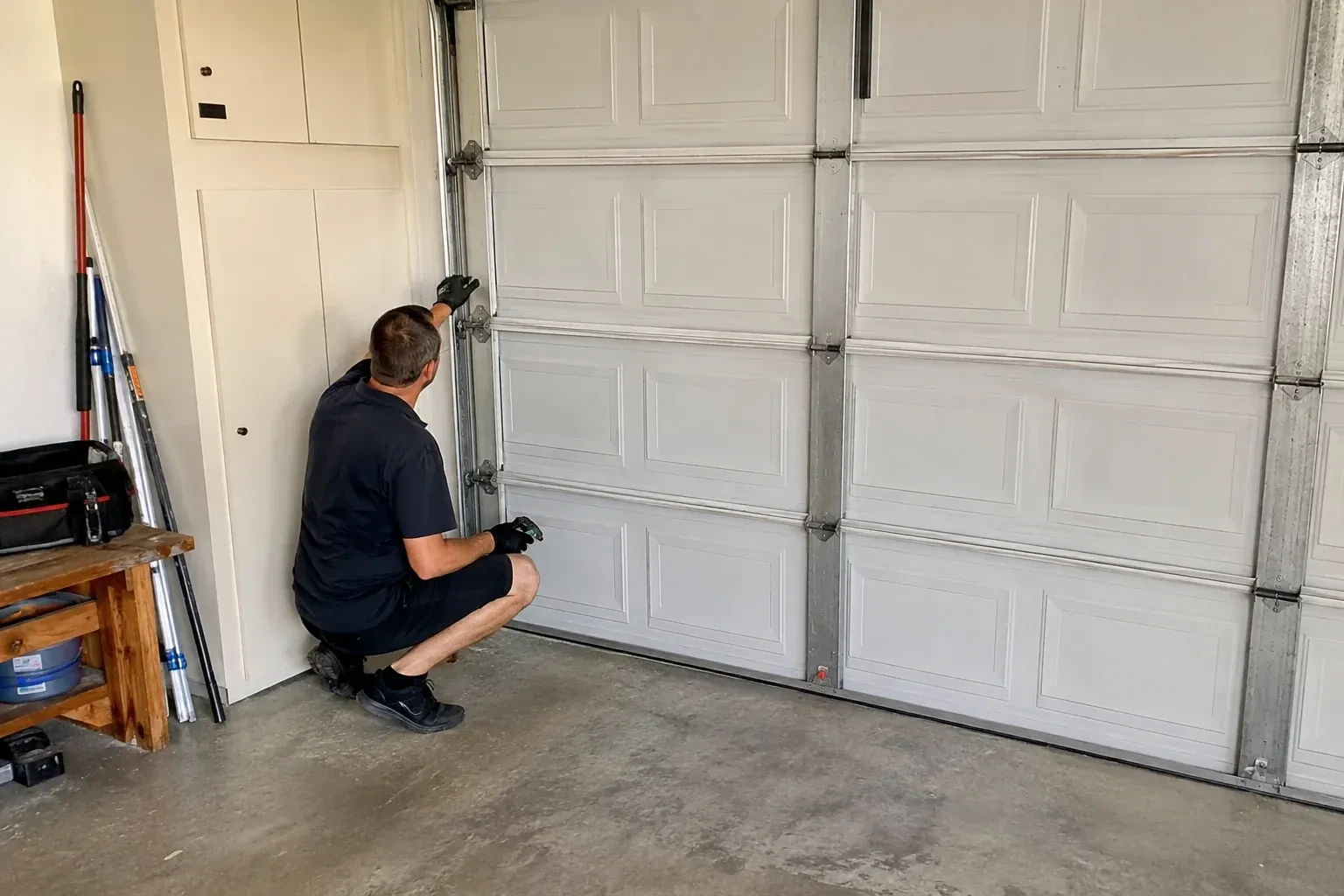
    The outside handle is turned while the inside of the door is watched. On a healthy lock the spindle rotates the centre body, a cam pushes both bars outward and a spring pulls them back. When the handle turns but nothing follows, the fault is somewhere in that short chain: a spindle that has twisted or sheared, a set screw that has let the inside knob spin free, a cam that has worn round, or a spring that has snapped. The inside cover comes off to see which, and the body is checked for cracks or for pulling away from the door. The exact broken piece decides whether a small part or a complete mechanism is fitted.

  2. Scene 2

    Settling how the lock and the opener will live together

    With the lock working, the opener is brought back into the picture. As opener makers direct, the bars are removed or fixed back so they can never reach the track, and the opener's own lock-out feature on the wall console is demonstrated as the way to secure a parked door. If the household wants a lock available for outages, that calls for a manufacturer-approved interlock rather than a label alone, and the technician explains what that would involve. Some openers also accept an add-on automatic deadbolt. The opener is reconnected and run through full cycles.

  3. Scene 3

    Getting the cylinder and bars through winter

    The outside cylinder sits on a cold steel face where meltwater runs, so it gets a dry graphite or PTFE lubricant rather than oil, which would trap moisture and grit. A puff at the start of the cold season and another after the first thaw keeps the pins moving. A small tube of lock de-icer in the car is the answer to a keyway that has frozen; hot water is never poured on it. The bars and their guides, which live where salt spray collects, take a light silicone film in late autumn. Keep the threshold clear of packed snow so the door closes to its full depth and the bolt still finds its slot.

In the van

  • Keyed T-handle lock set
  • Spring-steel lock bars
  • Opener lock-out reminder label
  • Carriage bolts and backing plates
  • Inside slide bolt or snap latch

What shapes the quoteRouge Valley Garage Door Co.

Cylinder work and the number of keys
Rekeying, a new cylinder and each key cut are separate items. Keying the garage to match the house key adds a little pinning time and is listed on its own.
Adjust, repair or replace
A guide reset or a cylinder rekey is a small job; a new mechanism or a complete handle set with bars is a larger one. The inspection settles which is needed before anything is quoted.
Slide bolt or keyed handle
An inside slide bolt is a simple piece of hardware with one moving part. A keyed T-handle has a cylinder, spindle, centre body, springs and two bars, and its repair takes more time and more parts.

FeesSame any hour

Have it ready

Before you call · 0 / 3

(289) 806-3304

The questions that come up

Why does the inside knob spin without doing anything?

The knob is meant to grip the square spindle with a set screw, and that screw has loosened or the spindle's flat has worn so the knob no longer bites. Sometimes the spindle itself has sheared inside the door. The technician tightens a fresh set screw onto a proper flat or fits a new spindle of the correct length, and the knob and outside handle move as one again.

Do you replace the whole handle or just the cylinder?

Whichever the fault calls for. A worn or broken cylinder in a handle that is otherwise sound is swapped or rekeyed on its own. A handle that is cracked, corroded through or of a pattern with no parts available is replaced as a set with its spindle and inside turn handle. The technician shows you what has failed before either route is taken.

My key will not turn in the cold. What is happening?

Meltwater has run down the door face into the keyway during a thaw and frozen overnight, or cold has stiffened old lubricant inside the cylinder. Lock de-icer or gentle warmth frees it; hot water is avoided because it refreezes and can crack cold metal. Afterwards the cylinder is dried and given a dry graphite or PTFE lubricant that sheds moisture instead of trapping it.

Torontoinformation

TorontoOntario

Garage Door Manual Lock Repair · Agincourt, Agincourt North, Clarks Corners, Sullivan, Tam O'Shanter

Town
Toronto
In business
25 years
Hours
Open 24/7
Nights, weekends and holidays, same fees
Visits
On-site assessment preferred. Request a visit or call.

2021 census: what it means at the door

Every square is one home in a hundred.

  • 58 in 100 homes · older homes
  • About 58% of homes in Toronto were built in 1980 or earlier, according to the 2021 Census.Original openers in older neighbourhoods often predate photo-eye sensors and rolling-code remotes. Bringing one up to date means a quieter motor, sensors that stop the door for a child or pet, and remotes that cannot be copied from the driveway, all installed in a single visit.
  • Single-detached houses make up about 23% of homes in Toronto (2021 Census).Condo and townhouse garages are frequently used for storage as much as parking, with the door opened many times a day, and the shared walls mean vibration travels. A well-balanced door, tight hardware and a quiet opener are the upgrades residents notice most.

Source: Statistics Canada, Census Profile

Open Toronto in Google Maps

On-site assessment

Request a visit.

On the old wooden door out back, one lock bar hangs loose from a rusted guide and the other is bent at an angle, so the handle turns but the door can still be lifted a hand's width from outside.

(289) 806-3304, open 24/7.