Sound familiar?Toronto
- The call
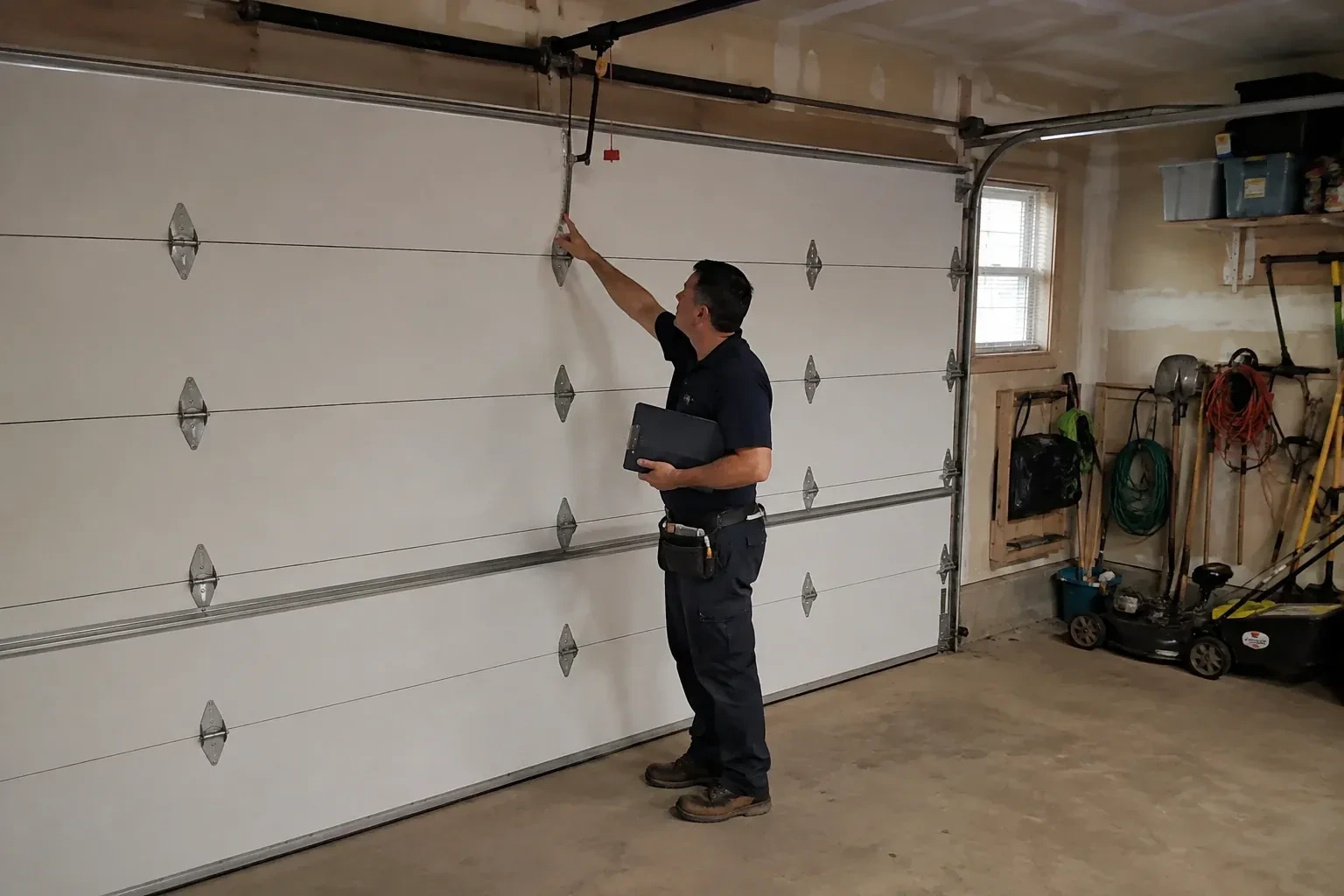
- During the power outage you pulled the red cord and tried to lift the door by hand. It felt like lifting a piano, and when you let go part-way it sank back toward the floor on its own.
On bright afternoons the door goes down a metre, stops, and climbs back up while the light on the opener blinks. After dark it closes perfectly.
What you get back is a report with four kinds of entry. Items that are in good order, so you know what is fine. Maintenance items, such as lubrication or a loose hinge bolt, which are often handled during the same visit if you wish. Repairs to plan, such as a worn roller set or a cable showing rust at the bottom loop, quoted separately. And, rarely, a stop-use item, where the door should stay put until a specific part is corrected. That last category is the reason the inspection exists, and the report says plainly which items fall into it.
Sound familiar?Toronto
Garage Door Safety Inspection · Toronto
Scene 1
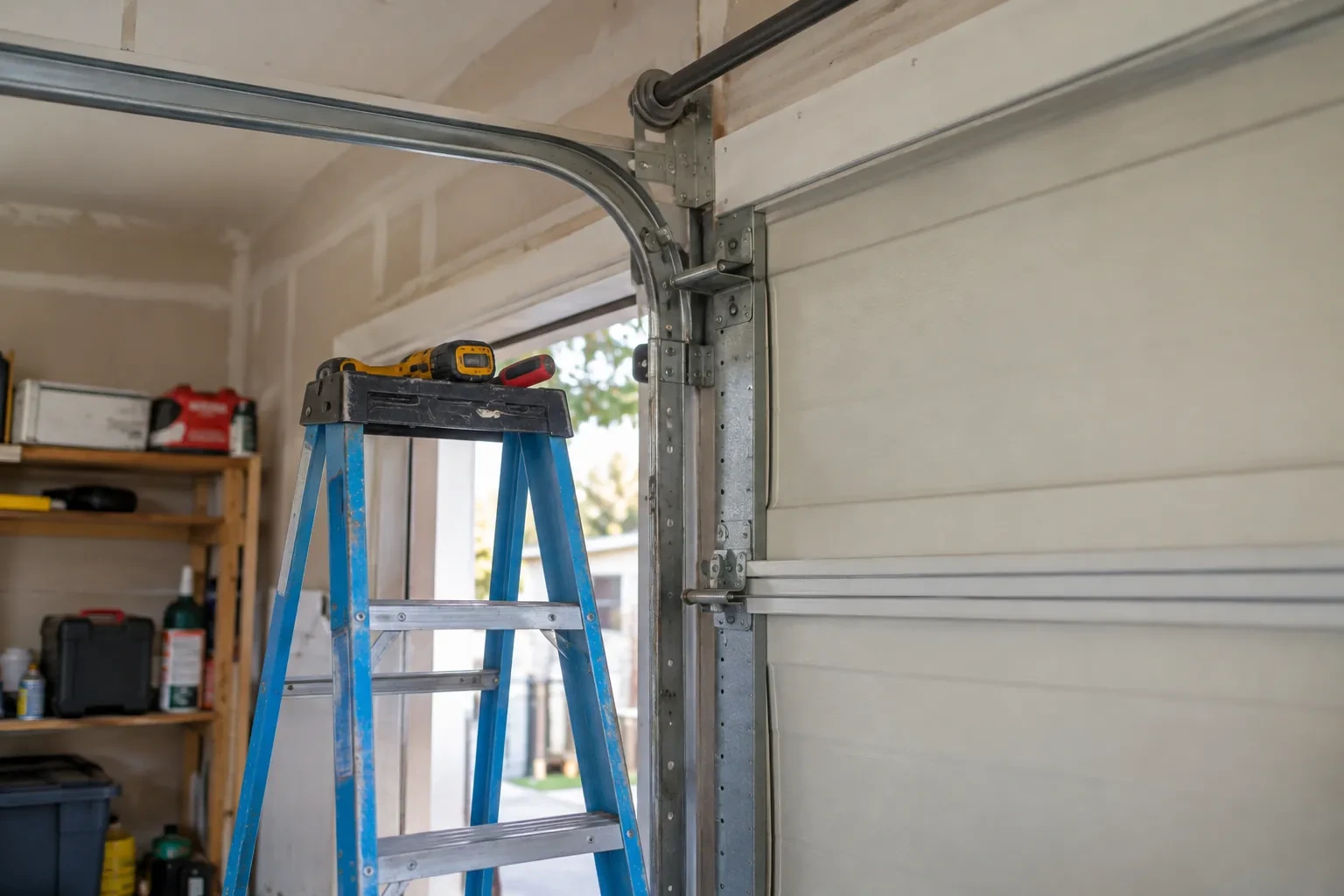
Turning to the opener, the technician checks that the motor head is secure on its hangers, the rail is straight and its header bracket firmly fixed, and the curved arm meets the door at a bracket that is bolted to a reinforced section rather than thin steel. The chain, belt or screw drive is looked at for slack or wear. The photo eyes are located, their height above the floor noted, their lenses and wiring checked, and the wall control, remotes, keypad and lock or vacation button are each identified so they can be tested in turn. This is also where the manual release cord and handle are confirmed to be within reach and in working order.
Scene 2
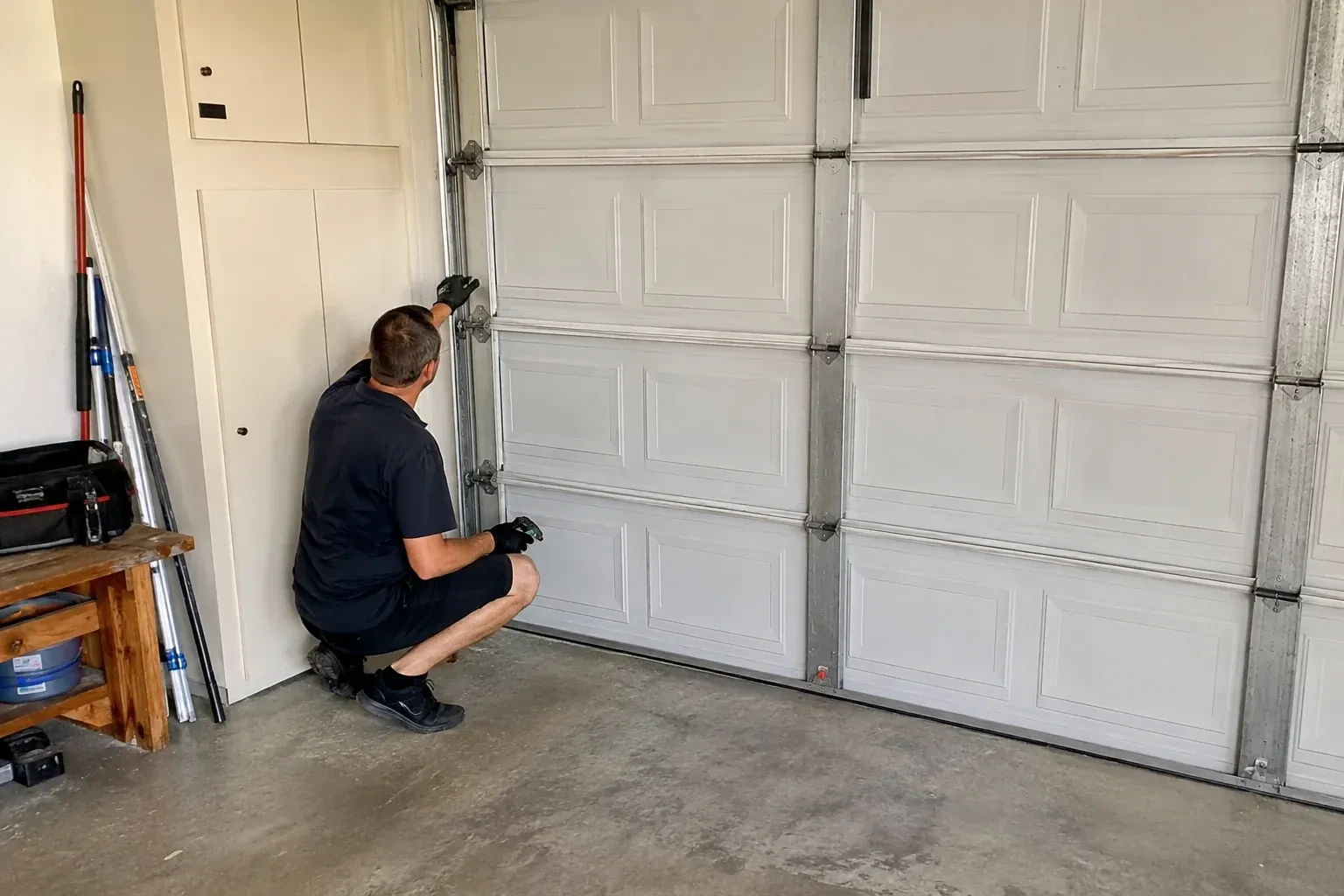
With the door fully closed, the technician pulls the release cord to disconnect the opener, then lifts the door by its handle or a safe grip on the bottom section. It should rise with light, even effort, stay put when let go around waist height, and lower to the floor without slamming. A door that drifts up is over-sprung; one that sinks or feels heavy is under-sprung or bound somewhere in its travel. Binding at a particular height points at a roller, a hinge or a track rather than the springs. The result is recorded as a finding; any change to spring tension is quoted as separate work, done under controlled torque with proper winding bars and the door secured.
Scene 3
The inspection leaves you with a short routine. Once a month, with the door closed, pull the release cord and lift the door by hand; it should move easily and hold at waist height. Reconnect the opener, lay a flat board on the floor and send the door down; it should reverse when it touches. Then start it closing and wave a broom handle through the photo-eye beam; it should reverse before contact. Each of these takes under a minute and mirrors what the technician did. If any of the three behaves differently from the day of the inspection, that is the moment to call, while it is still a small job.
What shapes the quoteRouge Valley Garage Door Co.
FeesSame any hour
The door is parked in a safe position, usually closed, with the opener disconnected so nobody runs it by habit, and the reason is shown to you. The correction is explained and quoted as its own piece of work, and once it is done the door is retested through the balance, reversal and photo-eye checks before it goes back into daily service. Another door into the house or garage is used in the meantime.
It answers the questions a home inspection leaves open. A general inspector confirms the door opens and closes; a door technician records the make and age of the hardware, how much life the springs and cables appear to have, whether the safety devices pass, and what to budget for. For a seller, the same report settles a buyer's questions before they are asked and shows the door was cared for.
Most often it is the photo eyes. A sensor knocked slightly out of line, a lens with a film of road grime, a loose wire, or low afternoon sun shining straight into one eye will each break the beam as far as the opener is concerned. The next candidates are a down-force setting that has drifted, a binding roller or a door that has gone out of balance. The inspection checks each in turn.
TorontoOntario
Garage Door Safety Inspection · Agincourt, Agincourt North, Clarks Corners, Sullivan, Tam O'Shanter
Every square is one home in a hundred.
On-site assessment
On bright afternoons the door goes down a metre, stops, and climbs back up while the light on the opener blinks.
(289) 806-3304, open 24/7.
On-site assessment preferred · (289) 806-3304, open 24/7