Sound familiar?Toronto
- The call
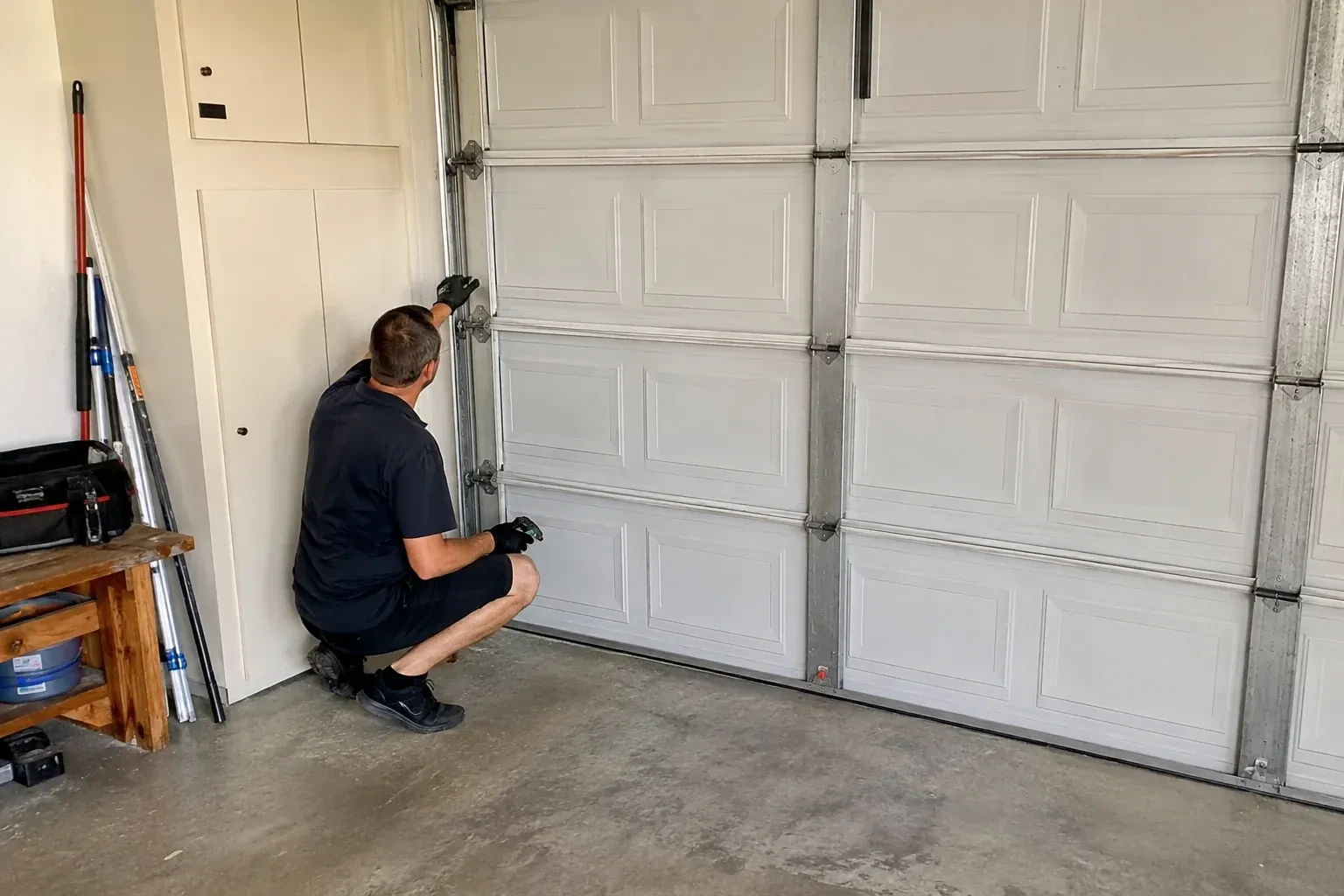
- A delivery van backed into the shop's overhead door this afternoon. The lower panel is pushed in, the track on that side is kinked, and the door is hanging unevenly with staff unable to close up for the night.
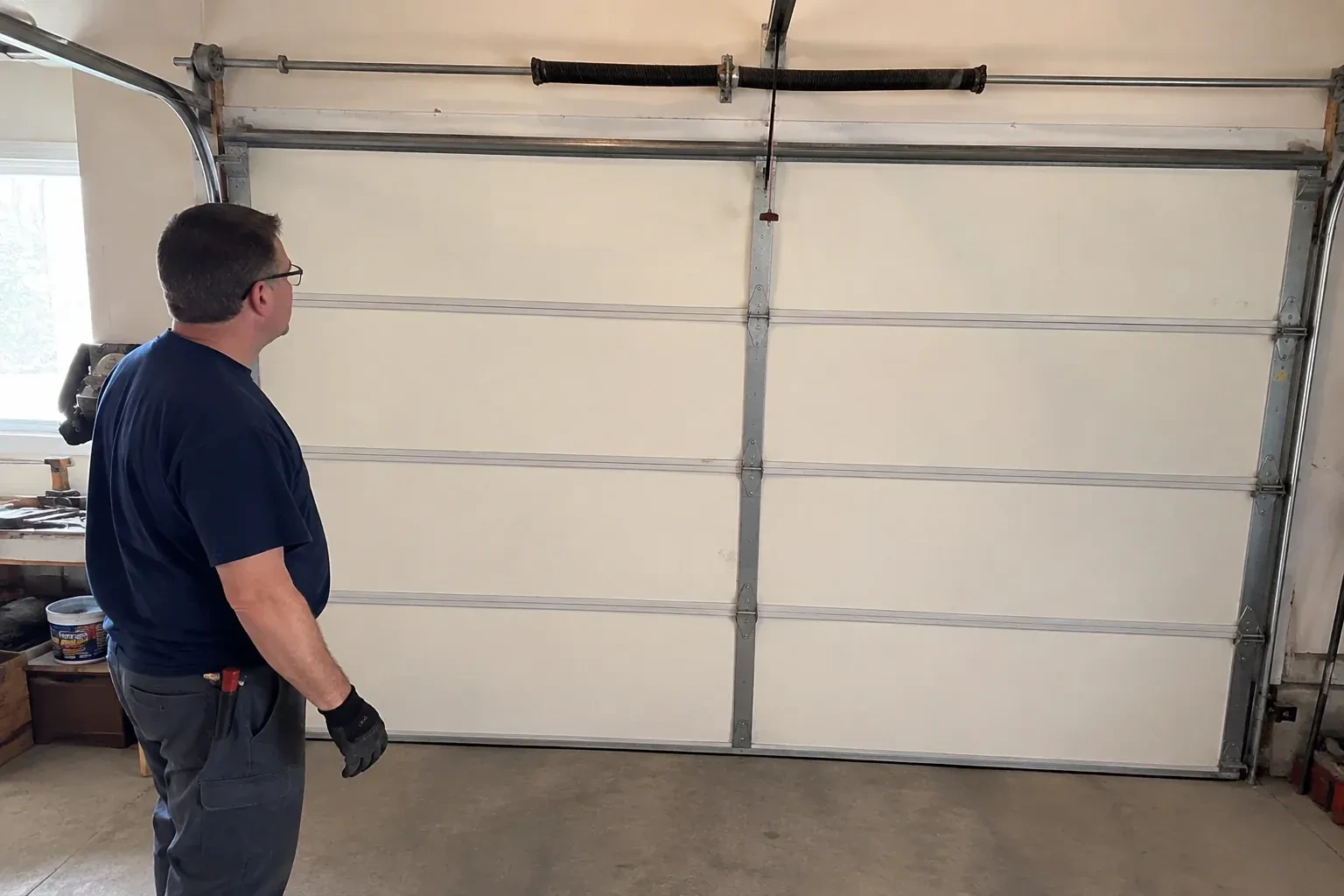
The morning after a thaw the opener groaned, the door stayed stuck to the icy floor for a second, then lurched up crooked. It stopped halfway with a grinding scrape and has not moved since.
The finish of an off-track reset matters as much as the re-seating. Once the rollers are home and the track is true, the door is disconnected from the opener and moved by hand through its whole travel while every roller is watched in its rail. At the halfway point it should stay put with little effort, which shows the springs are carrying the weight properly. Only then is the opener reconnected, its travel limits and force checked, and its safety reversal tested with a block on the floor and a carton passed through the photo-eye beam from a safe distance. You see the door work before the technician leaves.
Sound familiar?Toronto
Off-Track Garage Door Reset · Toronto
Scene 1
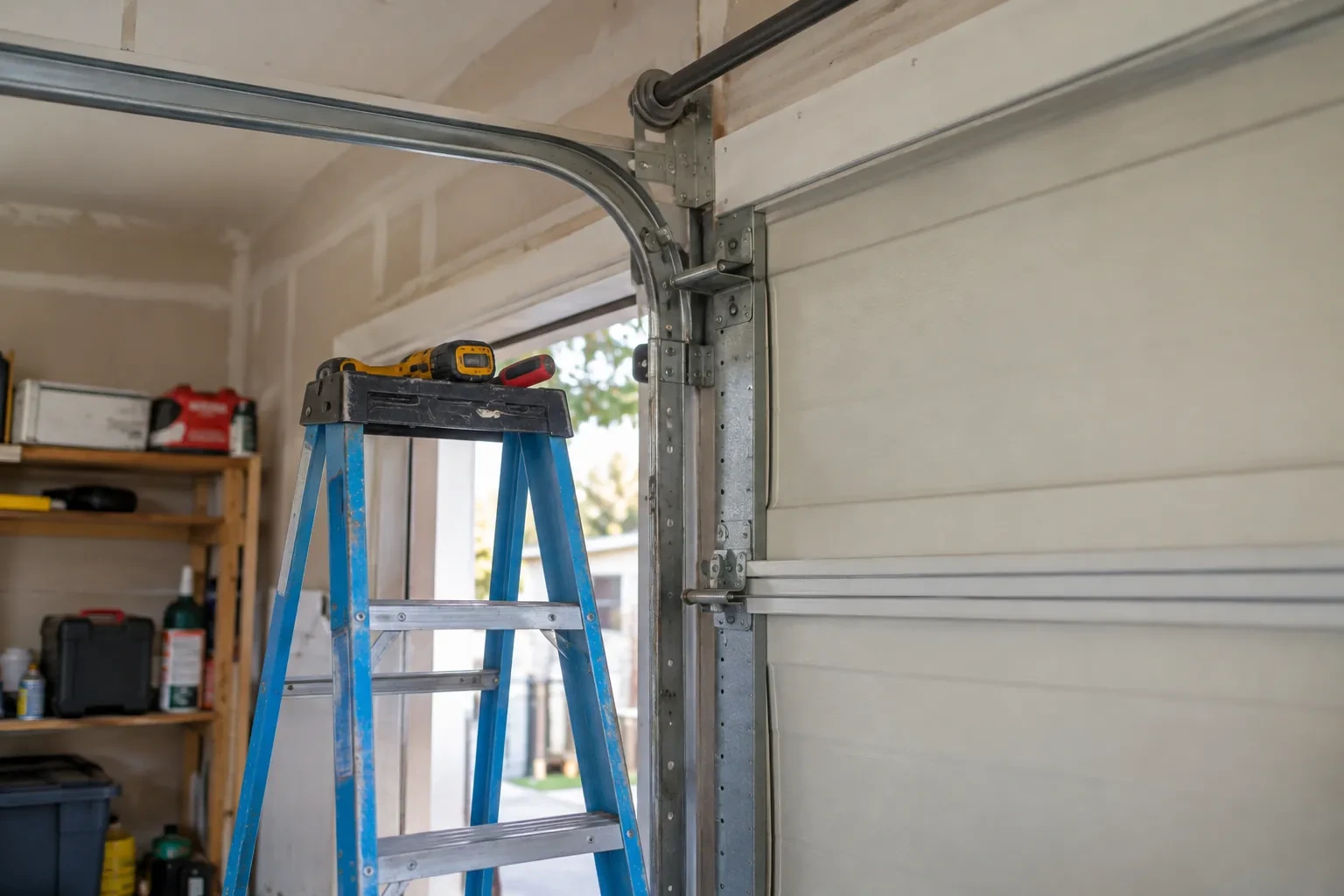
The counterbalance is what will carry the door once it is back on its rails, so its condition is assessed at the start. Torsion springs above the header are checked for a break in the coil, a gap between coils and a loose stationary cone; extension springs beside the horizontal track are checked for stretch and for the containment cable running through them. The technician also looks at whether the springs match the door's weight, because a door that was already heavy for its springs makes the opener drag the sections and is a common background cause of a roller working loose.
Scene 2
Before the opener comes back into the picture the door is proven manually. The clamps come off, the technician lifts the door slowly from the bottom, watching each roller pass through the curve and along the horizontal rail, and listening for any scrape that would mean a tight spot. At the halfway point the door is let go and should hold there with little drift. It is raised fully and must stay up. Then it is lowered and must close level along the floor. Any drag, sway or roller lift at this stage is fixed now, because the opener would only hide it until the next event.
Scene 3
Doors rarely leave their tracks without notice. A door that starts closing with one corner touching down first, a cable that looks looser than its partner, a new squeal or grinding at the curve, a section that shudders as it passes the top of the track, or an opener that suddenly needs more force are all early signs. Each of them is a small adjustment when caught, and a reset when ignored. After the visit you know what the door sounded and looked like when it was right, which makes the change easy to spot. Calling at the first sign keeps the job to rollers or a bracket.
What shapes the quoteRouge Valley Garage Door Co.
FeesSame any hour
Lifting a crooked door is where most injuries around this problem happen, because the springs and cables are loaded unevenly and the door can shift suddenly. Tell the technician on the phone that a vehicle is inside; getting it out is part of the plan, and the door will be supported and levelled before it is raised. A short wait is far cheaper than a bent section or a hand caught between panels.
Often not. A track that is simply out of plumb, spread at the lip or loose on its brackets is re-formed and re-fixed. Replacement is for rail that has been crushed, kinked or torn by an impact, because a roller passing a tight spot will pop out again. The technician measures the damaged length against the door's roller size and tells you which case you have before any track is ordered or cut.
Both work when matched to the door. Steel rollers are durable and cope with heavy doors but run louder; nylon rollers with sealed bearings are noticeably quieter and need less attention, which suits an attached garage under a bedroom. What matters more than the material is the stem length and wheel size matching the hinges and track, and replacing all the rollers together so the door rides evenly on every one.
TorontoOntario
Off-Track Garage Door Reset · Agincourt, Agincourt North, Clarks Corners, Sullivan, Tam O'Shanter
Every square is one home in a hundred.
On-site assessment
The morning after a thaw the opener groaned, the door stayed stuck to the icy floor for a second, then lurched up crooked.
(289) 806-3304, open 24/7.
On-site assessment preferred · (289) 806-3304, open 24/7