Sound familiar?Toronto
- The call
- One of the little wheels along the edge of the door has a chunk missing, another sits crooked in its hinge, and there is a fine grey dust on the floor under the track where plastic has been wearing away.
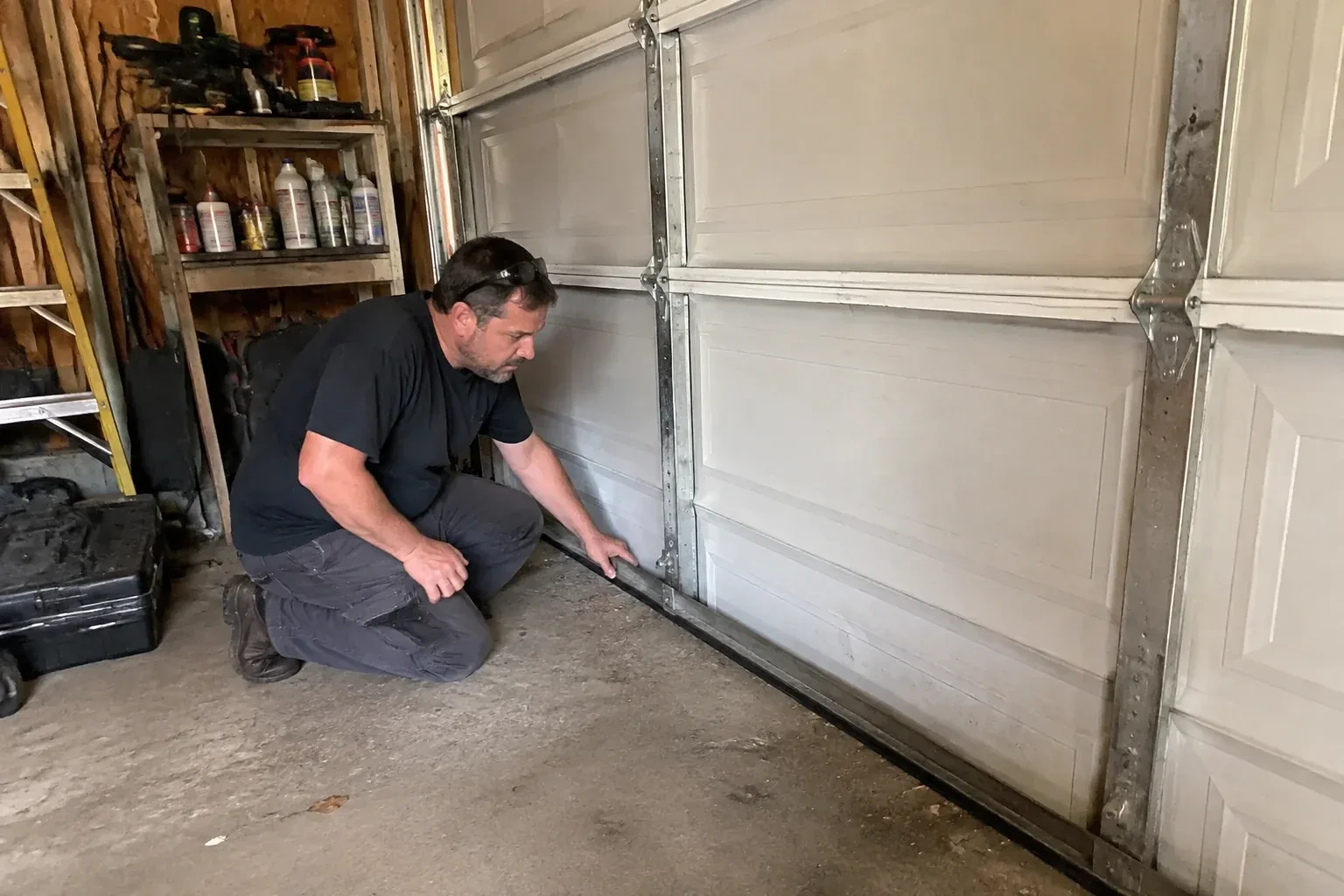
Every morning the door announces itself: a rattle on the way up, a grinding squeal on the way down, loud enough that the neighbours know when you leave. A spray of lubricant settled it for a day or two, then the racket came back.
A garage door opener is designed to guide a balanced door, not to haul a rough one. Rollers that bind, wobble or grind add resistance across the whole travel, and the opener answers by working harder, running hotter and tripping its force limit or reversing partway. Replacing worn rollers with a smooth-running set takes that load away, which is why the opener often sounds calmer after the same visit. The technician confirms the door holds its own weight with the opener released, then checks the opener's force and reversal settings once the new rollers are in.
Sound familiar?Toronto
Garage Door Roller Replacement · Toronto
Scene 1
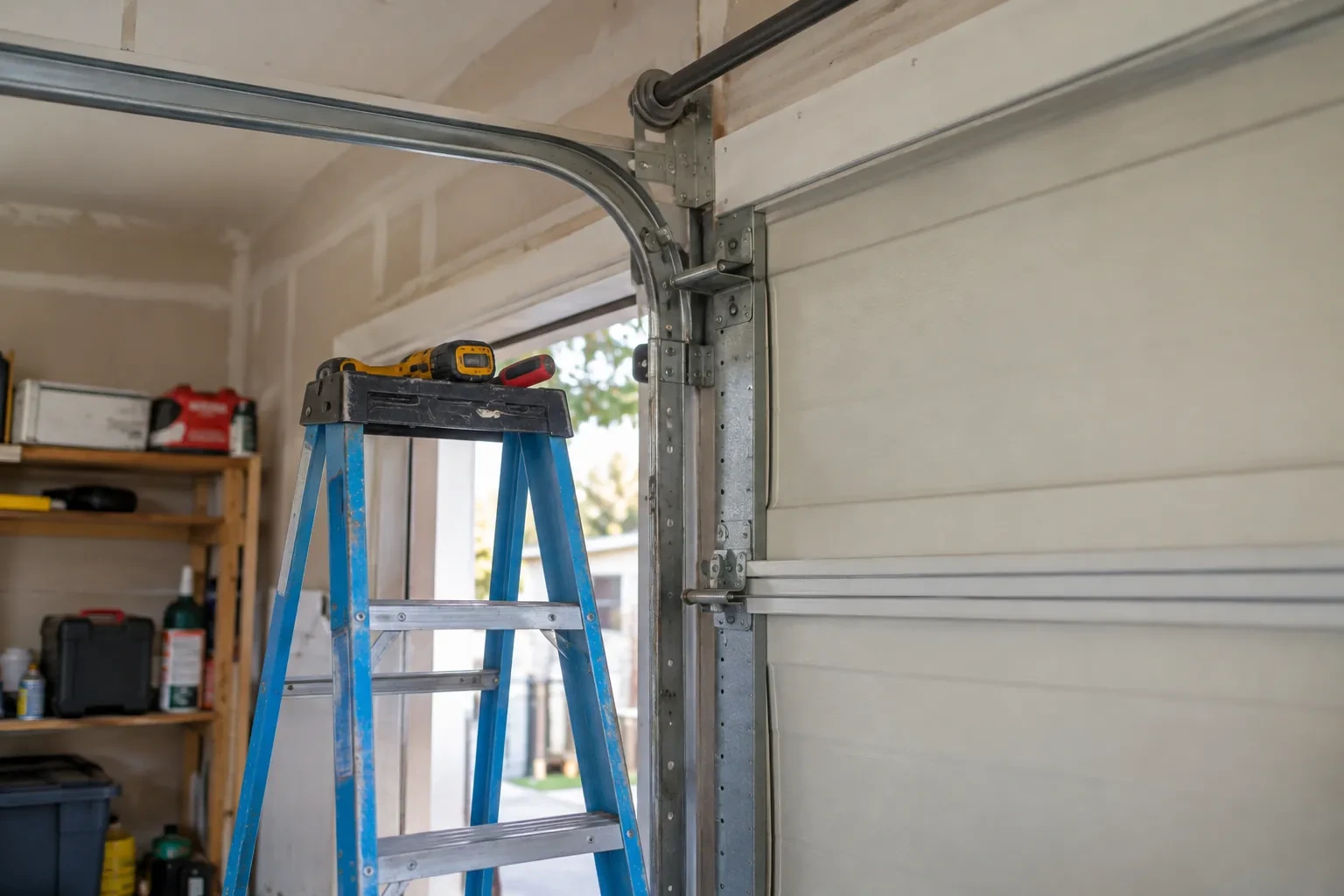
A single-skin steel door, an insulated double-skin door and a solid wood door place very different loads on their rollers, and the top rollers on a heavy door carry the most, since they travel furthest along the horizontal track under load. The technician identifies the door's construction and approximate weight, checks whether the end stiles carry single or double hinges, and looks at the rating of the rollers currently fitted. Many heavier doors left the factory on light plastic wheels intended for the lightest door in the range. Matching the new set's load rating and bearing count to the actual door is what makes the replacement last.
Scene 2
With the rollers changed, attention turns to the channel they run in. The technician clears grit, salt residue, old grease and any ice from the lower track, wipes the raceway clean, and checks each vertical track for plumb and each horizontal track for level and secure hangers. Jamb brackets and flag brackets are tightened or shifted so the track sits at the correct distance from the door, giving each new wheel a small amount of side play and a clear path around the curve. A dented lip is straightened where the metal allows, and a badly damaged length of track is pointed out for replacement.
Scene 3
Winter is where roller care pays off. Knock snow and slush off the car before pulling in when you can, and sweep or wipe the foot of the tracks after a heavy salt spell so brine and grit do not sit against the bottom rollers and brackets. If ice forms in the lower track, clear it by hand with warm water and a cloth rather than running the door through it, since wheels that skid across ice ridges wear flat spots. The bottom weather seal should sit fully on the floor; a gap lets meltwater run under the door and into the track.
What shapes the quoteRouge Valley Garage Door Co.
FeesSame any hour
The door is run through several cycles with the technician watching each wheel stay seated, then balanced by hand with the opener released to confirm it holds at halfway. The top section is checked for a tight seal at the header, the hinge and bracket fasteners are snugged, and the opener's force and reversal are tested with a 1-1/2 inch block in the door's path. The industry checklist for a residential door covers exactly these points, and they are all part of finishing the job.
The curve is where each roller changes direction under load, so it exposes wear that straight travel hides. A wheel worn oval or flat-spotted bumps as it turns the corner, a wobbling stem lets the section lean back as it enters the horizontal run, and a track whose radius has been knocked out of shape pinches or drops the wheel for an instant. Fresh rollers of the right size in a track that has been checked for shape and spacing usually take the shudder away.
The figure is the wheel diameter, and it has to match the track. Residential sectional doors run on two-inch track and take a two-inch wheel; commercial doors can run on either two-inch or three-inch track, so the wheel is matched to what is actually installed. Wheel size has little to do with noise, which comes from the wheel material and bearings. The technician measures the track and the existing wheel before ordering so the set fits, since a mismatched wheel either jams in the channel or rattles around in it.
TorontoOntario
Garage Door Roller Replacement · Agincourt, Agincourt North, Clarks Corners, Sullivan, Tam O'Shanter
Every square is one home in a hundred.
On-site assessment
Every morning the door announces itself: a rattle on the way up, a grinding squeal on the way down, loud enough that the neighbours know when you leave.
(289) 806-3304, open 24/7.
On-site assessment preferred · (289) 806-3304, open 24/7