Skip to content
RougeValley Garage Door Co.Open 24/7 (289) 806-3304
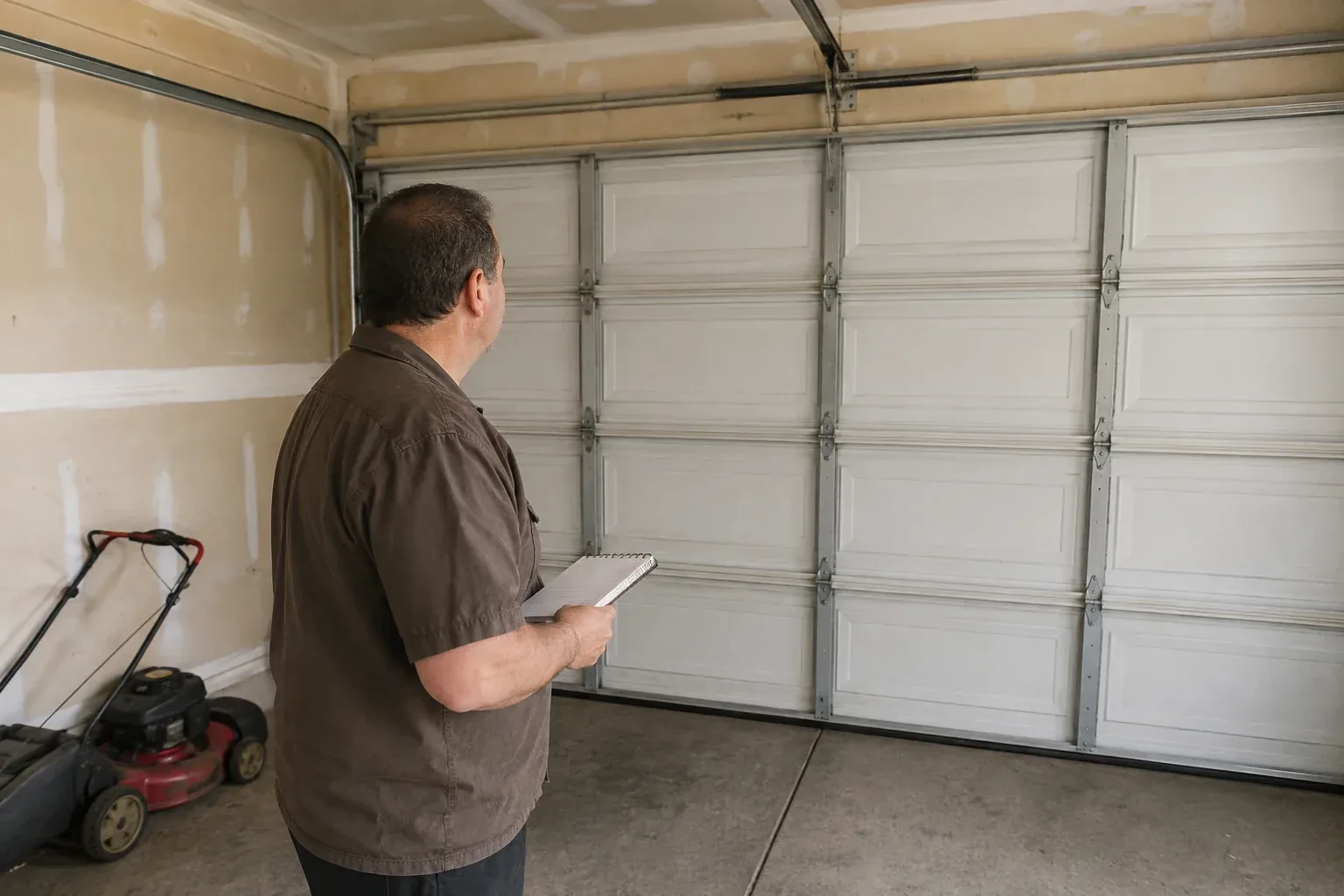
Technician holding a notebook while looking at a closed sectional door. — Garage Door Balance Adjustment, Toronto

Springs · Toronto

Garage Door Balance Adjustment

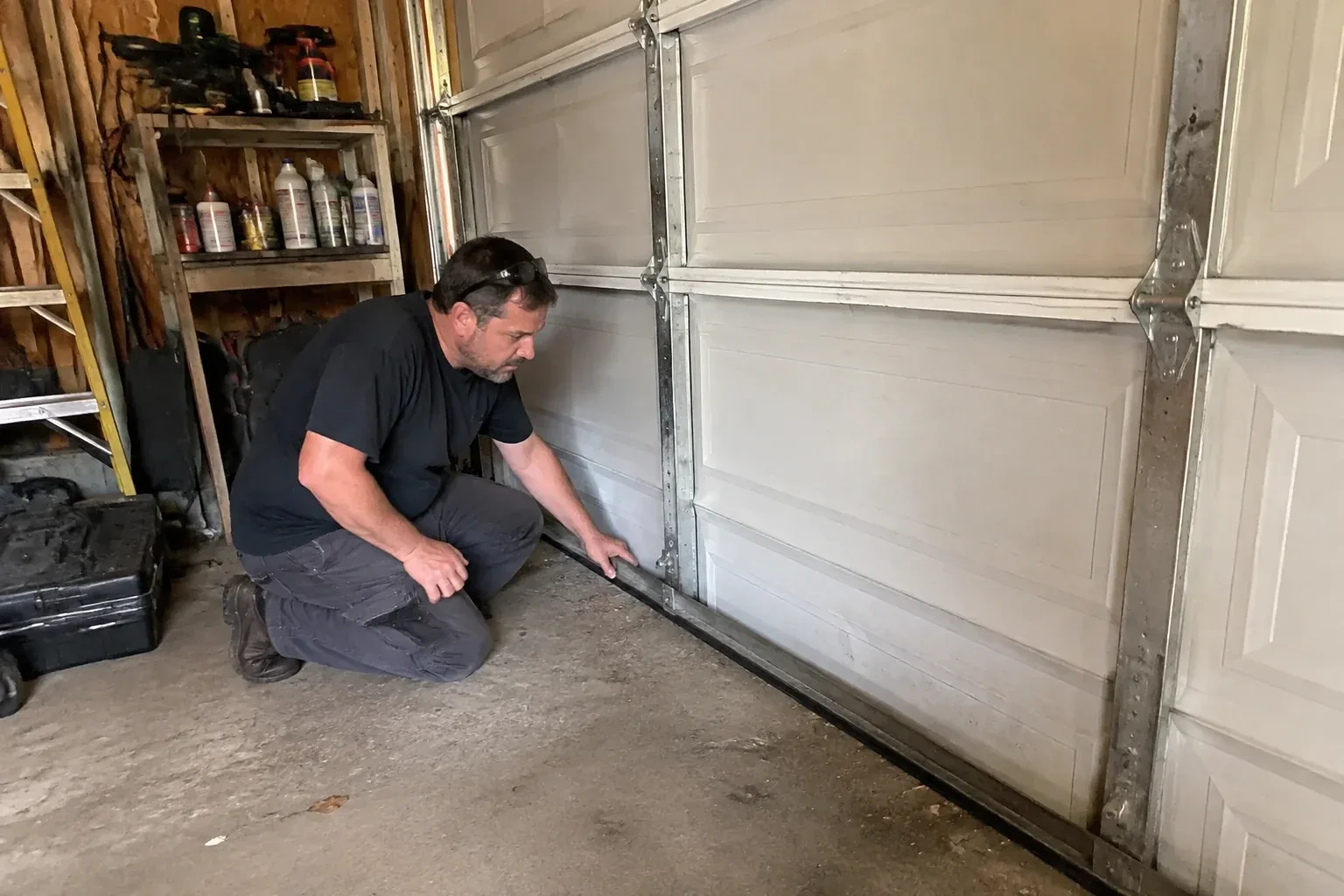
With the door closed, daylight shows under one bottom corner and the seal is squashed flat at the other. As it rises, the left side leads by an inch or two, and the top section twists slightly as it turns into the horizontal track.
In plain words

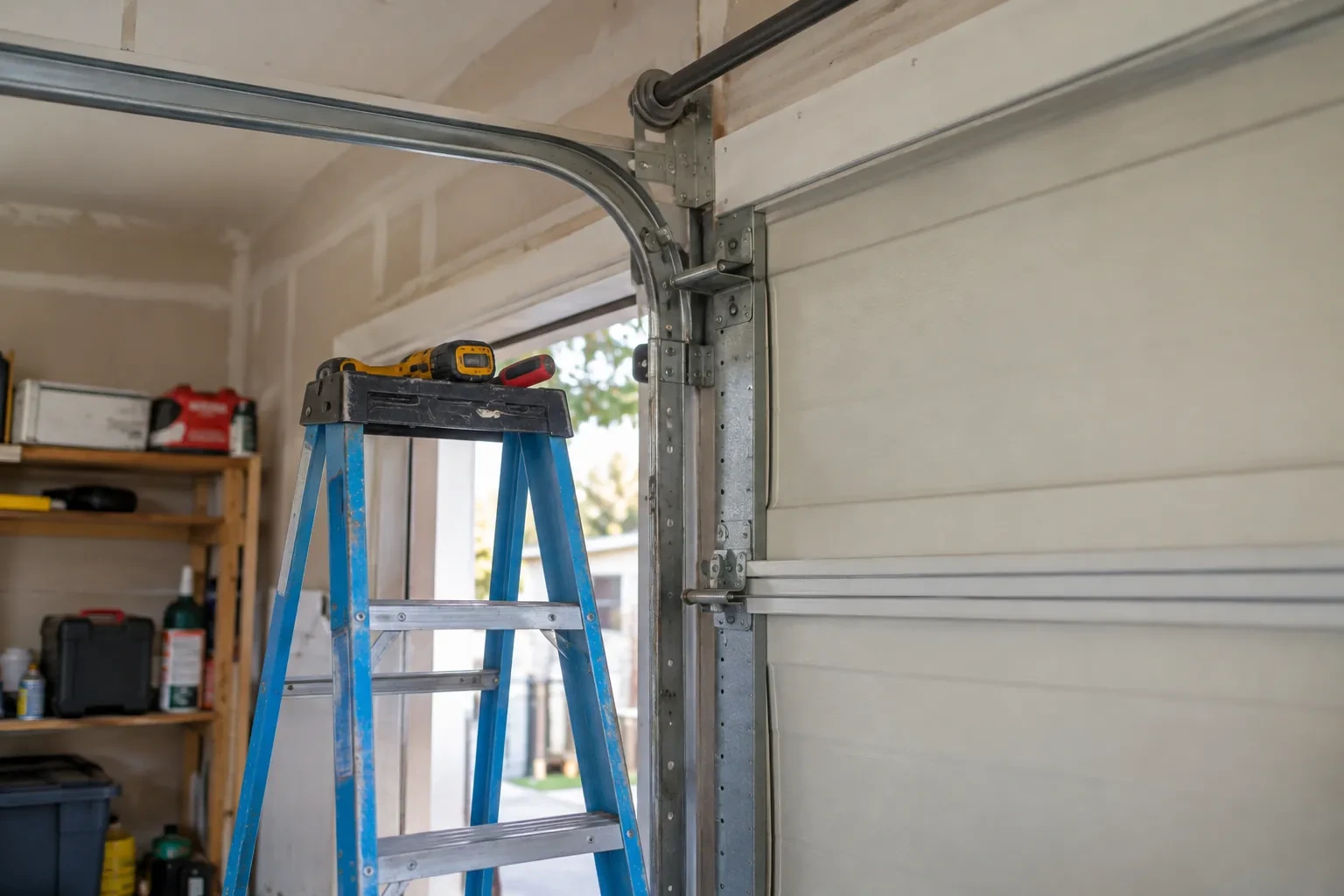
On a torsion door the springs sit on a shaft above the opening, and balance is set by how many turns of wind they carry. A seven-foot door typically needs a little over seven full turns; a quarter turn either way changes how the door feels. The technician clamps the door, fits winding bars into the cone, loosens the set screws, and adds or releases tension one quarter turn at a time, locking the cone again before each test. Both springs on a two-spring door are set alike so the shaft carries the load evenly. That precision is what makes the door hold wherever it is stopped.

Sound familiar?Toronto

The call
With the door closed, daylight shows under one bottom corner and the seal is squashed flat at the other. As it rises, the left side leads by an inch or two, and the top section twists slightly as it turns into the horizontal track.

NextHow the visit goes

Garage Door Balance Adjustment · Toronto

How the visit goes

Illustrative garage doors scene
  1. Scene 1

    Inspecting the springs before any turns are added

    Adjustment only makes sense on a spring that is sound, so each one is examined closely. On a torsion system the technician looks for a gap in the coil, rust pitting, uneven coil spacing and a cone that has slipped on the shaft, and measures the wire size, inside diameter and length to confirm the spring suits the door's weight. On extension springs the check is for stretched or opened coils, a broken end loop and the presence of a containment cable. A spring that has simply lost a little tension can be wound up; one that is undersized or near the end of its cycle life is explained and offered as a replacement instead.

  2. Scene 2

    Securing the door before the first turn

    Before any tension changes, the door is made immovable. The technician disconnects the opener, clamps a pair of locking pliers on the track just above a roller so the door cannot rise, and clears the area under the shaft. On a torsion system the springs remain wound while the winding bars are used to add or subtract turns, so nothing has to be fully unloaded for a simple adjustment. On an extension system the door is raised fully and clamped there, which relaxes the springs so the hooks and clips can be moved safely. This setup takes a few minutes and is what makes the adjustment itself calm and controlled.

  3. Scene 3

    A record of the setting

    Before leaving, the technician tells you how the door was set: the number of turns on each torsion spring or the hook position on each extension spring, the spring dimensions, the door's measured weight if it was weighed, and any parts that were replaced. Writing this on a card by the opener or inside the manual saves a future technician from starting from scratch, and it gives a reference point if the door ever starts to drift. Springs age gradually, so a note that says the door held at a certain number of turns tells a later visit how far things have moved.

In the van

  • Lift cables
  • Containment cables
  • Replacement hinges
  • Extension springs and S-hooks
  • Cable drums

What shapes the quoteRouge Valley Garage Door Co.

Torsion or extension springs
Winding a torsion spring with bars and moving an extension spring's hook are different procedures with different setup, and the type of counterbalance on your door is the first thing that shapes the quote.
Extension-spring containment and pulleys
On an extension door, a missing containment cable is added and worn pulleys are replaced with the adjustment. Each is a small parts line on the quote.
Single or double door
A double door commonly carries more spring than a single, but the exact count follows the manufacturer's engineered hardware package for that door's weight rather than width alone: one, two or more torsion springs, or one or two extension springs per side. More springs means more adjustment and testing.

FeesSame any hour

Have it ready

Before you call · 0 / 3

(289) 806-3304

The questions that come up

What is the red cord hanging from the opener for?

It is the manual release. Pulling it disconnects the door from the opener's trolley so the door can be moved by hand, which is how the balance test is done and how you get the car out during a power cut. The industry standard calls for it to be red and reachable, no more than about six feet above the floor. Reconnecting is usually as simple as running the opener once.

I added insulation panels to my door. Does that affect balance?

Yes, and it is one of the most common reasons a door starts to sink. Springs are matched to the door's weight, and insulation kits, replacement sections, windows or a heavier seal add weight the original springs were not sized for. A technician can weigh the door and either add tension to suit it or, if the added weight is beyond what the springs can carry, specify new ones.

Why does my door drift upward when I let go of it?

Too much spring tension. The springs are pulling harder than the door weighs, so at rest they win and the door climbs. This often follows a spring replacement wound a turn too far, or a door that lost weight when heavy panels were swapped for lighter ones. Releasing a quarter turn or two, tested after each, brings it back to holding still.

Torontoinformation

TorontoOntario

Garage Door Balance Adjustment · Agincourt, Agincourt North, Clarks Corners, Sullivan, Tam O'Shanter

Town
Toronto
In business
25 years
Hours
Open 24/7
Nights, weekends and holidays, same fees
Visits
On-site assessment preferred. Request a visit or call.

2021 census: what it means at the door

Every square is one home in a hundred.

  • 58 in 100 homes · older homes
  • About 58% of homes in Toronto were built in 1980 or earlier, according to the 2021 Census.Original openers in older neighbourhoods often predate photo-eye sensors and rolling-code remotes. Bringing one up to date means a quieter motor, sensors that stop the door for a child or pet, and remotes that cannot be copied from the driveway, all installed in a single visit.
  • Single-detached houses make up about 23% of homes in Toronto (2021 Census).Condo and townhouse garages are frequently used for storage as much as parking, with the door opened many times a day, and the shared walls mean vibration travels. A well-balanced door, tight hardware and a quiet opener are the upgrades residents notice most.

Source: Statistics Canada, Census Profile

Open Toronto in Google Maps

On-site assessment

Request a visit.

With the door closed, daylight shows under one bottom corner and the seal is squashed flat at the other.

(289) 806-3304, open 24/7.