Skip to content
RougeValley Garage Door Co.Open 24/7 (289) 806-3304
Illustrative garage doors scene — Garage Door Roller Replacement, Toronto

Springs · Toronto

Garage Door Roller Replacement

Every morning the door announces itself: a rattle on the way up, a grinding squeal on the way down, loud enough that the neighbours know when you leave. A spray of lubricant settled it for a day or two, then the racket came back.

In plain words

Most of the noise a garage door makes comes from its rollers. Steel wheels on a steel track are loud by nature and grow louder as their bearings dry out and pit, and the plastic wheels fitted to many new doors have no bearings at all, so they simply grind as they wear. Moving to nylon rollers with sealed ball bearings changes the sound of a door more than any other single part, because the nylon tire absorbs vibration instead of passing it into the track and the ceiling. The same visit lubricates the hinges and squares the track so the quiet lasts.

Sound familiar?Toronto

The call
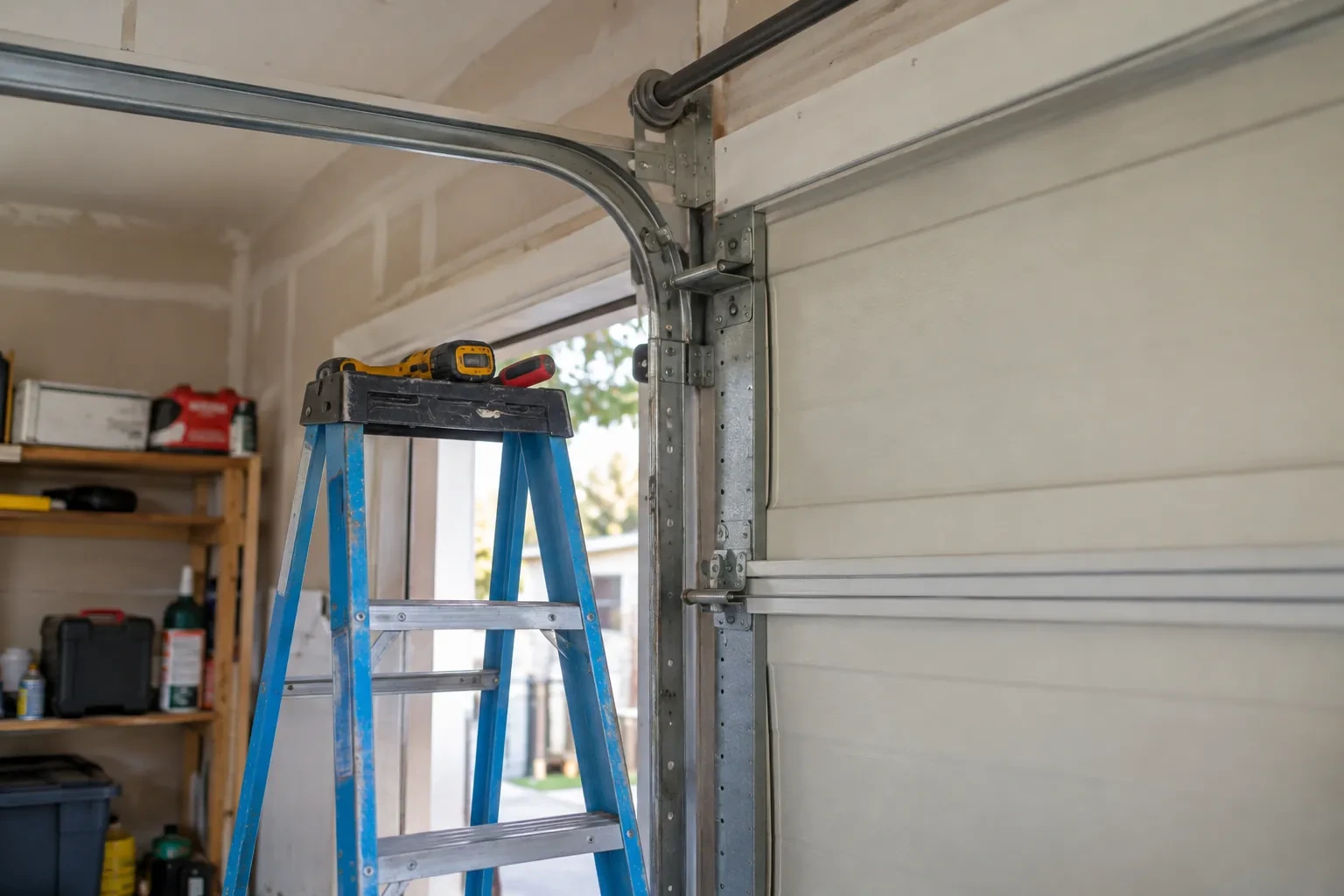
New springs went in last year and the door balances well, yet it still clicks along the ceiling track like a train over rail joints. The wheels are the originals, worn to an oval, and the noise follows them from one end of the travel to the other.
NextHow the visit goes

Garage Door Roller Replacement · Toronto

How the visit goes

Illustrative garage doors scene — Toronto
  1. Scene 1

    Track straightness and roller clearance

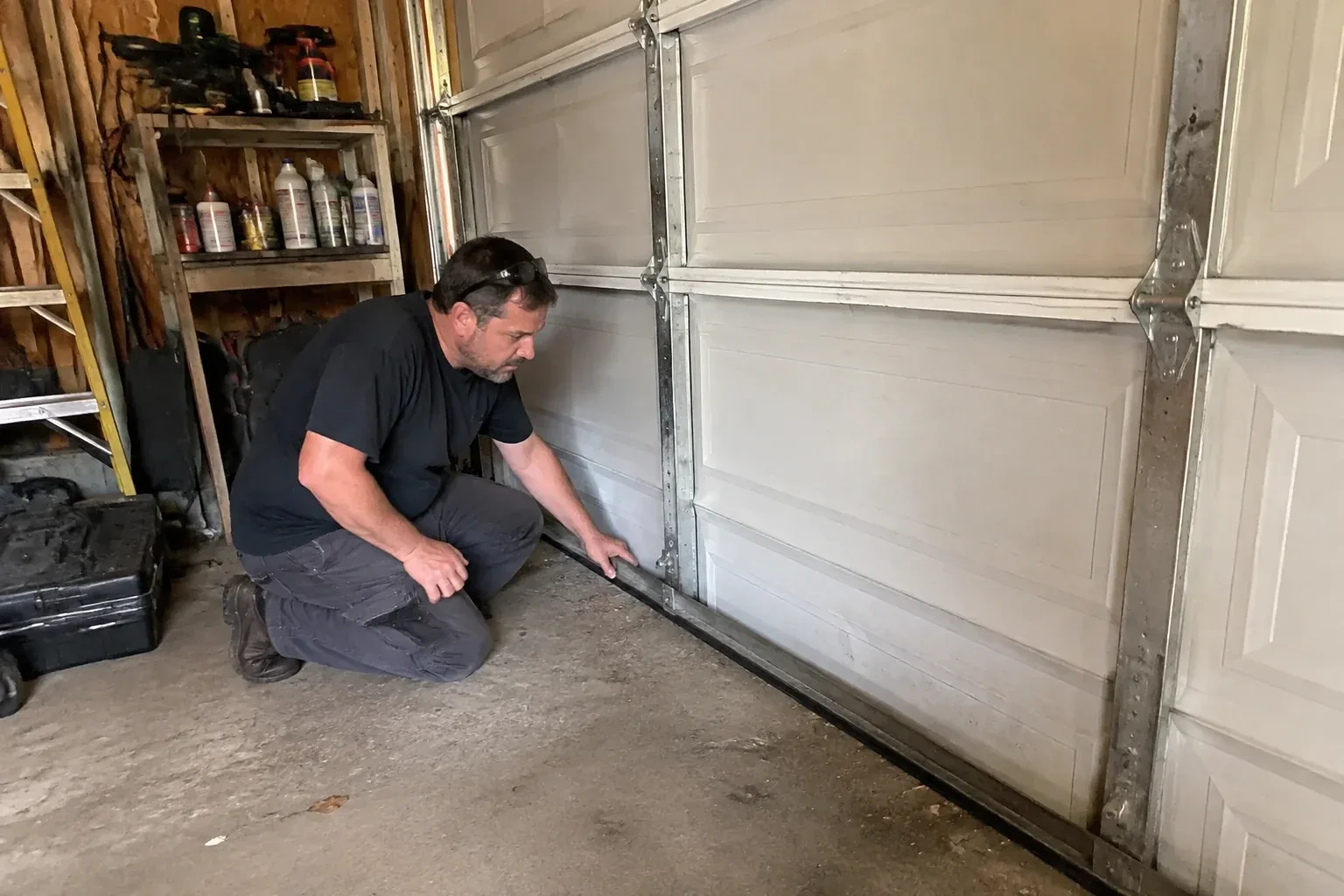
    The vertical tracks are checked for plumb and the horizontal tracks for level and for sag at the rear hangers. The technician sights along each track for dents, spread or pinched edges, rust scale and the debris that collects in the bottom few inches. Clearance matters too: a wheel should turn freely with a little side play, neither squeezed by a track pulled too close to the door nor so loose that the door can lean. Where the track has drifted, the jamb brackets are adjusted before new rollers go in, because fitting fresh wheels to a crooked track simply wears them the same way the old ones went.

  2. Scene 2

    Running it in and testing

    The opener is reconnected and the door is run through several full cycles while the technician watches each wheel stay seated in its track and listens for anything left over. Balance is rechecked with the opener released. Then the opener's settings are confirmed: the force limits, which may need reducing now that the door moves so freely, and the reversal, tested against a 1-1/2 inch block laid on the floor in the door's path exactly as the industry checklist describes. Only when the door travels smoothly, seals at the top and reverses on contact is the job called finished.

  3. Scene 3

    Looking after nylon rollers

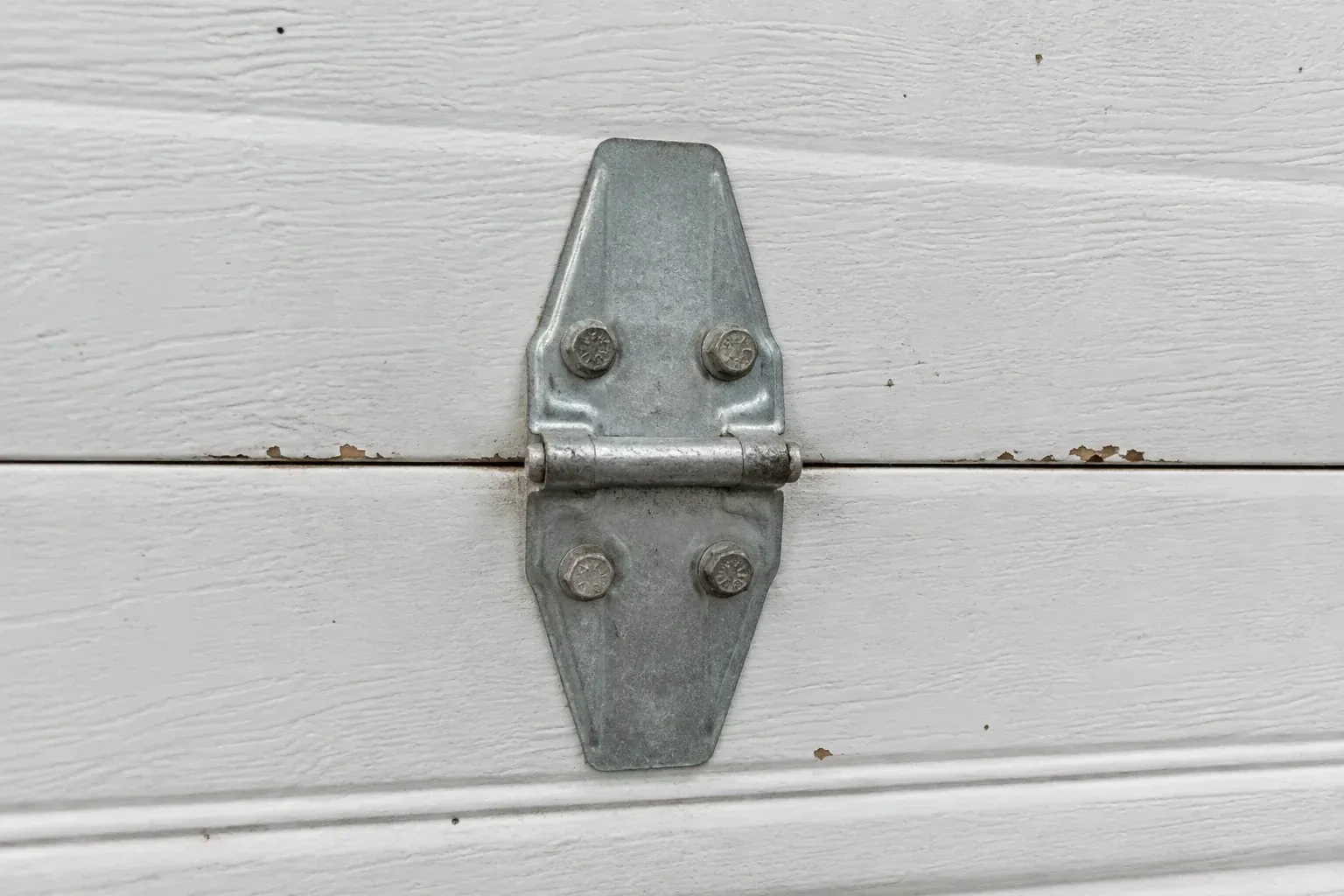
    Modern nylon rollers ask for very little. Twice a year, glance along each track with the door closed for a wheel that sits crooked, a cracked tire or a stem that has begun to wobble. Give the hinge knuckles a short burst of garage door lubricant once or twice a year, and leave the wheels and track dry; lubricate bearings only if the roller's maker calls for it, since some are sealed or built to run without added grease. Keep the bottom of each track swept clear of leaves, grit and, in winter, slush. Rollers with sealed bearings need even less, since the seal keeps dirt and moisture away from the balls; a wipe and a look is enough.

In the van

  • Two-inch nylon ball-bearing rollers
  • Sealed-bearing nylon rollers
  • Bottom brackets
  • Adjustable top fixtures
  • Steel ball-bearing rollers

What shapes the quoteRouge Valley Garage Door Co.

Combining with spring or cable work
If springs or cables are being replaced in the same visit, the door is secured once and the roller set is added to that job, which is often more economical than a separate call.
Weight and construction of the door
A heavy insulated steel or solid wood door needs higher-rated rollers and takes more care to secure and handle than a light single-skin door, which shows in both parts and time.
Top fixtures and bottom brackets
A top fixture that no longer adjusts, or a bottom bracket that has corroded or bent, is changed while the door is secured, and the quote names each piece.

FeesSame any hour

Have it ready

Before you call · 0 / 3

(289) 806-3304

The questions that come up

What is checked after the rollers go in?

The door is run through several cycles with the technician watching each wheel stay seated, then balanced by hand with the opener released to confirm it holds at halfway. The top section is checked for a tight seal at the header, the hinge and bracket fasteners are snugged, and the opener's force and reversal are tested with a 1-1/2 inch block in the door's path. The industry checklist for a residential door covers exactly these points, and they are all part of finishing the job.

Why does the door shake as it rounds the curve of the track?

The curve is where each roller changes direction under load, so it exposes wear that straight travel hides. A wheel worn oval or flat-spotted bumps as it turns the corner, a wobbling stem lets the section lean back as it enters the horizontal run, and a track whose radius has been knocked out of shape pinches or drops the wheel for an instant. Fresh rollers of the right size in a track that has been checked for shape and spacing usually take the shudder away.

What is the difference between two-inch and three-inch rollers?

The figure is the wheel diameter, and it has to match the track. Residential sectional doors run on two-inch track and take a two-inch wheel; commercial doors can run on either two-inch or three-inch track, so the wheel is matched to what is actually installed. Wheel size has little to do with noise, which comes from the wheel material and bearings. The technician measures the track and the existing wheel before ordering so the set fits, since a mismatched wheel either jams in the channel or rattles around in it.

Torontoinformation

TorontoOntario

Garage Door Roller Replacement · Agincourt, Agincourt North, Clarks Corners, Sullivan, Tam O'Shanter

Town
Toronto
In business
25 years
Hours
Open 24/7
Nights, weekends and holidays, same fees
Visits
On-site assessment preferred. Request a visit or call.

2021 census: what it means at the door

Every square is one home in a hundred.

  • 58 in 100 homes · older homes
  • About 58% of homes in Toronto were built in 1980 or earlier, according to the 2021 Census.Original openers in older neighbourhoods often predate photo-eye sensors and rolling-code remotes. Bringing one up to date means a quieter motor, sensors that stop the door for a child or pet, and remotes that cannot be copied from the driveway, all installed in a single visit.
  • Single-detached houses make up about 23% of homes in Toronto (2021 Census).Condo and townhouse garages are frequently used for storage as much as parking, with the door opened many times a day, and the shared walls mean vibration travels. A well-balanced door, tight hardware and a quiet opener are the upgrades residents notice most.

Source: Statistics Canada, Census Profile

Open Toronto in Google Maps

On-site assessment

Request a visit.

Every morning the door announces itself: a rattle on the way up, a grinding squeal on the way down, loud enough that the neighbours know when you leave.

(289) 806-3304, open 24/7.