Skip to content
RougeValley Garage Door Co.Open 24/7 (289) 806-3304
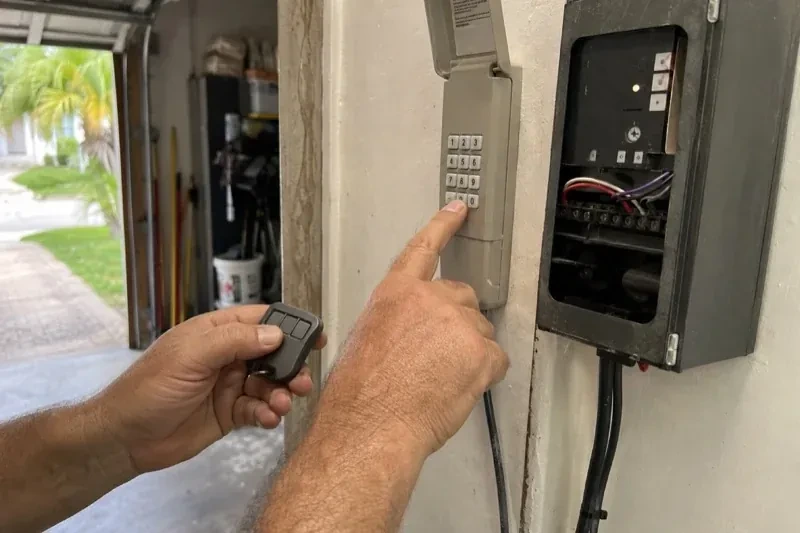
Hands holding a small remote and pressing a wall-mounted keypad beside an open control box with visible wiring. — Garage Door Remote and Keypad Programming, Toronto

Openers · Toronto

Garage Door Remote and Keypad Programming

The outdoor keypad worked all summer. Now that the mornings are below freezing it lights up faintly, takes the code, and the door does nothing.

In plain words

Built-in garage buttons in a car's mirror or overhead console are remotes like any other, often with one extra step. On many rolling-code openers the car first learns the signal from a working handheld remote held close to it, then the opener learns the car: the technician presses the learn button and, in the window that follows, presses the vehicle button until the door moves. A fresh battery in the handheld remote makes the first step reliable, though some vehicle systems follow a different sequence with no handheld remote, so the instructions are confirmed first. An older system sometimes needs a small bridge module.

Sound familiar?Toronto

The call
You bought a new remote at the hardware store, followed the little leaflet twice, and the opener light never blinked. The old remote still works. The new one does nothing at all, from the driveway or standing directly under the motor.
NextHow the visit goes

Garage Door Remote and Keypad Programming · Toronto

How the visit goes

Illustrative garage doors scene — Toronto
  1. Scene 1

    Which generation is this opener?

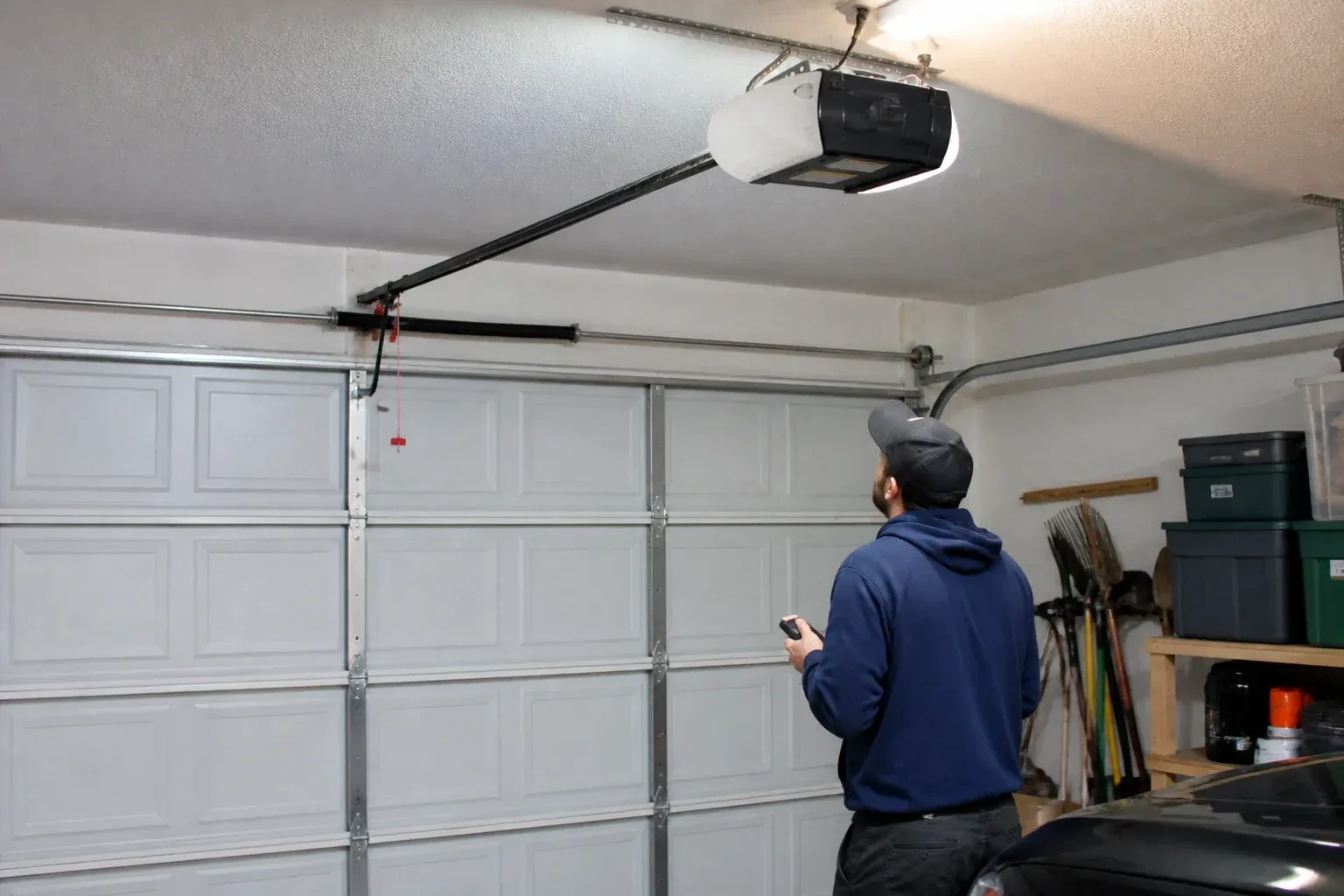
    Under the light cover of the head unit, near the antenna wire, sits the learn or program button. Its colour on many makes and the model label beside it tell the technician which radio generation the receiver belongs to, and that decides which remotes and keypads can ever be paired with it. Most openers from the mid-1990s onward use rolling codes, earlier ones often fixed codes set by switches, but age alone does not confirm which; the model settles it. The accessory in hand is compared against the maker's compatibility list before its packaging is opened. Ten seconds with a ladder here prevents an afternoon of pressing buttons on a remote that was never going to work.

  2. Scene 2

    Proving the door is safe after programming

    Every programming visit ends the same way, because a control that moves the door is also a control that can close it on something. Each remote button, each keypad code, each vehicle button and the wall control are operated in turn while the technician watches the full travel. Then the door is closed onto a 2x4 lying flat on the floor and must return to open on contact, and closed again while an object passes through the photo-eye beam, which must stop and reverse it. Only when both tests pass is the work signed off and the controls handed over.

  3. Scene 3

    Batteries, and when to change them

    Each remote and keypad leaves with a fresh cell of the type the maker specifies, and you know what those types are, since a coin cell in a remote and the small cells in a keypad are different. The first sign of a fading remote is shrinking range rather than sudden silence, so a remote that needs you closer than it used to is asking for a battery. Outdoor keypads are hardest on cells in the cold months; changing them each autumn saves a frozen-morning surprise. Rechargeable cells are not recommended for many keypads, and the record notes that.

In the van

  • Multi-door keypad
  • CR2032 and CR2016 coin cells
  • Low-interference replacement bulbs
  • Contact cleaner and fibreglass brush
  • Universal multi-generation remote

What shapes the quoteRouge Valley Garage Door Co.

Keypad supplied or existing
Programming a keypad already on the wall is one task. Supplying and mounting a new one, including anchors for brick or siding, is a larger item.
Range and interference work
Swapping bulbs, freeing the antenna and re-testing range from the street is a small addition when remotes work only up close.
Add-on receiver for an older opener
Converting a fixed-code opener means a receiver kit, wiring to the wall-button terminals and new remotes, quoted as an upgrade rather than a programming call.

FeesSame any hour

Have it ready

Before you call · 0 / 3

(289) 806-3304

The questions that come up

Can a phone app replace remotes and keypads?

On connected openers the app is one more control, useful for checking the door is closed and letting someone in from afar. Remotes, the keypad and the wall control keep working without a network, so most households keep them alongside the app. During programming the technician confirms the app account is in your name and that no previous owner's phone is still linked, and tests the app with the other controls.

Do I need to be home for the programming visit?

Yes, for two reasons. The technician confirms that the person authorising changes to the door's access is the owner, a tenant with permission or the building manager, and you choose the keypad code yourself so it is never known to anyone else. You also test each control in your own hand before the visit ends. Have every remote and vehicle you want programmed available, since a car parked elsewhere cannot be trained.

Can a keypad work with any opener?

A keypad, like a remote, must match the opener's radio generation. Makers publish which keypads suit which openers, and universal keypads cover most units made since the mid-1990s. Very old fixed-code openers need an add-on receiver first, and then a keypad pairs with that receiver. The technician checks the match before the keypad's packaging is opened, so you do not end up with a device that lights up but cannot be heard.

Torontoinformation

TorontoOntario

Garage Door Remote and Keypad Programming · Agincourt, Agincourt North, Clarks Corners, Sullivan, Tam O'Shanter

Town
Toronto
In business
25 years
Hours
Open 24/7
Nights, weekends and holidays, same fees
Visits
On-site assessment preferred. Request a visit or call.

2021 census: what it means at the door

Every square is one home in a hundred.

  • 58 in 100 homes · older homes
  • About 58% of homes in Toronto were built in 1980 or earlier, according to the 2021 Census.Original openers in older neighbourhoods often predate photo-eye sensors and rolling-code remotes. Bringing one up to date means a quieter motor, sensors that stop the door for a child or pet, and remotes that cannot be copied from the driveway, all installed in a single visit.
  • Single-detached houses make up about 23% of homes in Toronto (2021 Census).Condo and townhouse garages are frequently used for storage as much as parking, with the door opened many times a day, and the shared walls mean vibration travels. A well-balanced door, tight hardware and a quiet opener are the upgrades residents notice most.

Source: Statistics Canada, Census Profile

Open Toronto in Google Maps

On-site assessment

Request a visit.

The outdoor keypad worked all summer.

(289) 806-3304, open 24/7.