Skip to content
RougeValley Garage Door Co.Open 24/7 (289) 806-3304
Illustrative garage doors scene — Off-Track Garage Door Reset, Toronto

Repairs · Toronto

Off-Track Garage Door Reset

The morning after a thaw the opener groaned, the door stayed stuck to the icy floor for a second, then lurched up crooked. It stopped halfway with a grinding scrape and has not moved since.

In plain words

Older doors and workshop doors tend to come off their tracks for reasons of wear rather than impact. Steel rollers lose their bearings and grind down to the stem, wood jambs dry out and let lag screws spin, back hangs loosen and the horizontal track drifts out of level. A reset on a door like this is partly restoration: worn rollers are replaced as a set, fasteners are moved into sound wood or through-bolted, the horizontal tracks are re-hung square to each other, and hinges that have bent from years of misalignment are swapped. The door comes back quieter and straighter than it has run in years.

Sound familiar?Toronto

The call
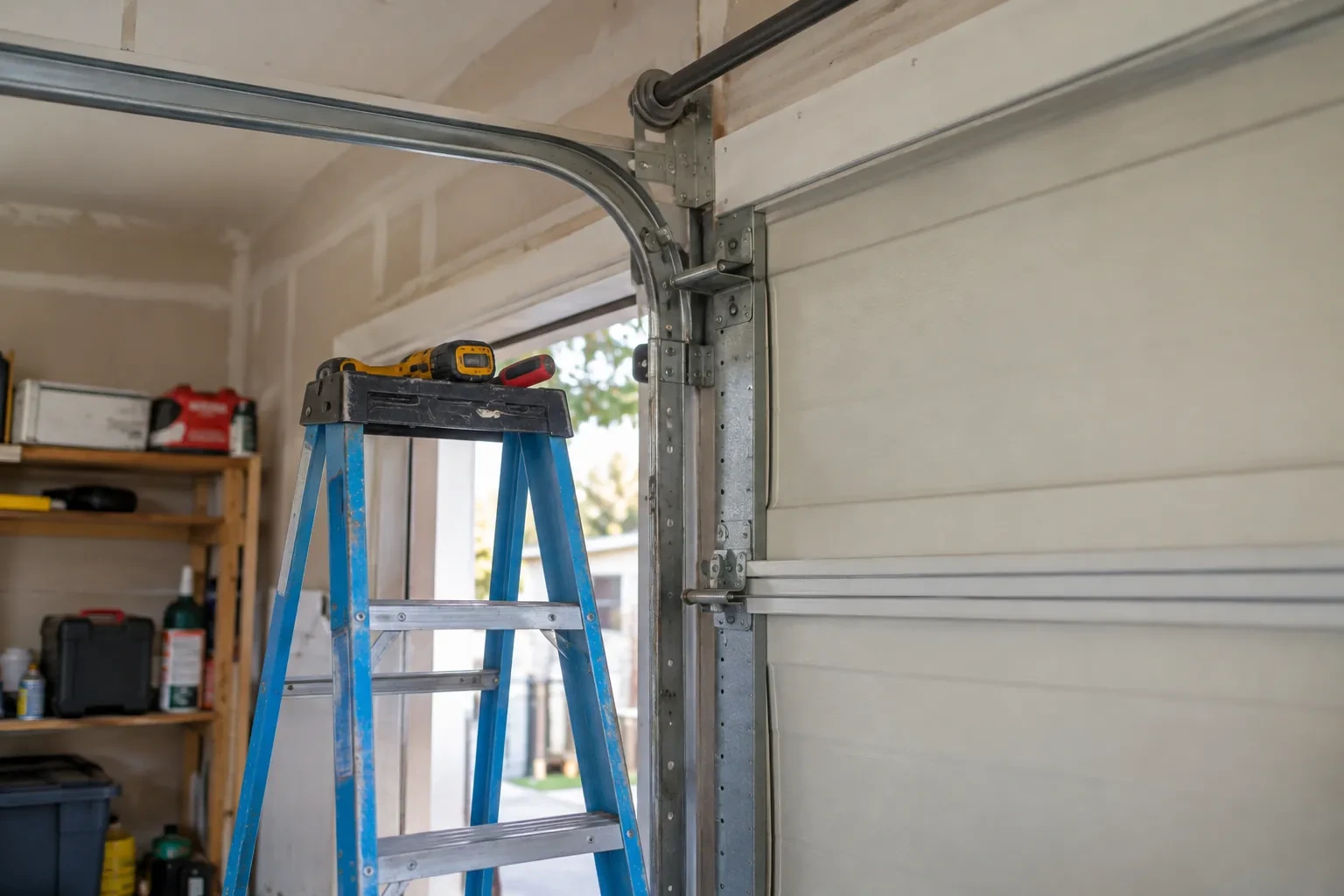
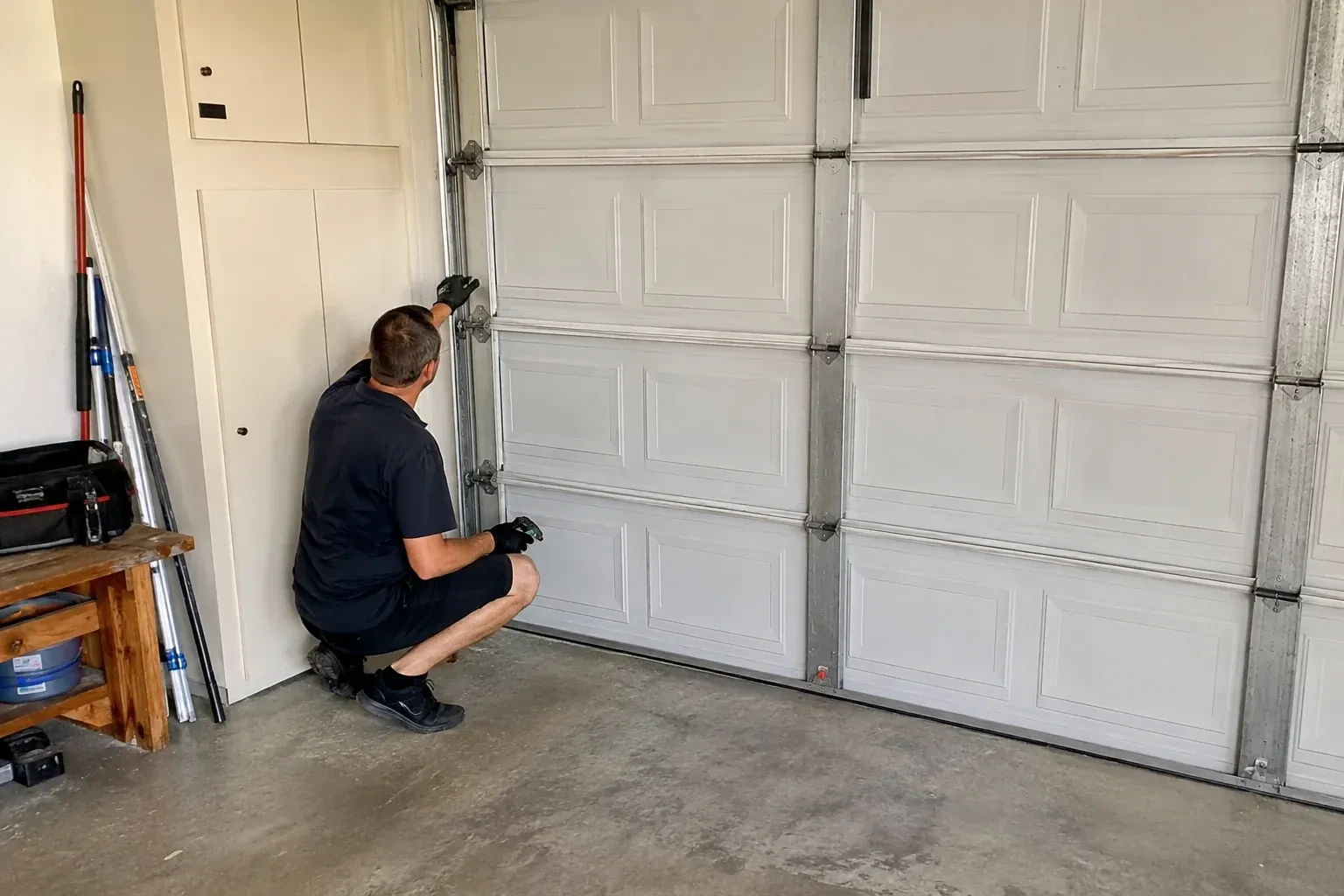
You tapped the door with the bumper while backing in, barely a nudge, and now the bottom corner has swung inward. One roller is dangling outside the rail, the section is twisted, and the door will neither rise nor settle flat.
NextHow the visit goes

Off-Track Garage Door Reset · Toronto

How the visit goes

Illustrative garage doors scene — Toronto
  1. Scene 1

    Springs and balance, read before the reset

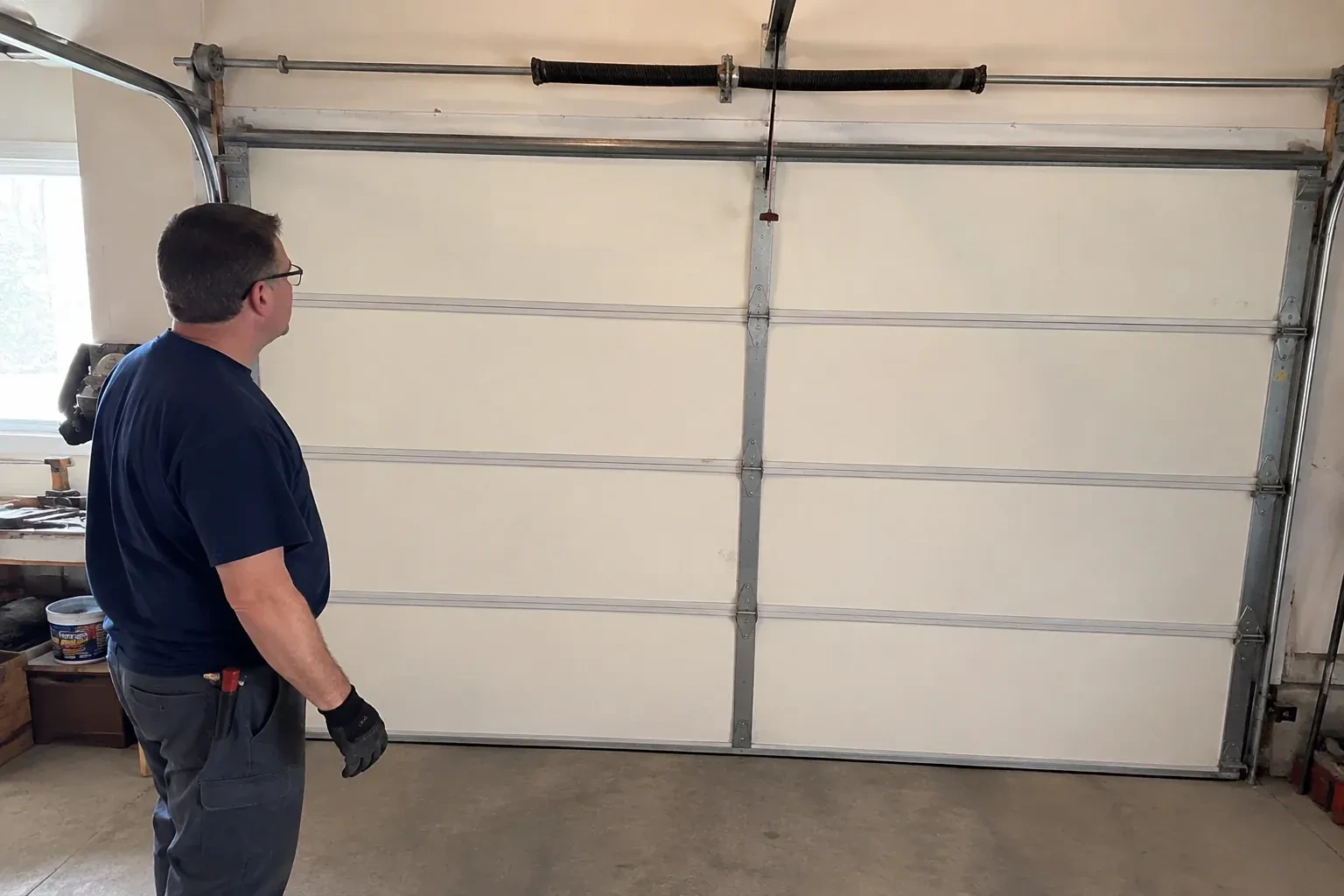
    The counterbalance is what will carry the door once it is back on its rails, so its condition is assessed at the start. Torsion springs above the header are checked for a break in the coil, a gap between coils and a loose stationary cone; extension springs beside the horizontal track are checked for stretch and for the containment cable running through them. The technician also looks at whether the springs match the door's weight, because a door that was already heavy for its springs makes the opener drag the sections and is a common background cause of a roller working loose.

  2. Scene 2

    Reconnecting the opener and re-teaching it the door

    The last stage returns automatic operation. The trolley is reconnected, the manual slide lock disabled or removed, and the door run through several cycles from the wall control. Travel limits are reset so the door seats on the floor without pressing into it, and the force settings are brought back to the minimum the door needs, which on a balanced door is not much. Then the safety systems are exercised: the door must reverse off a 1.5 inch block laid in its path and must refuse to close when the photo-eye beam is broken. The remotes and keypad are checked, and the door is left cycling as smoothly as its hardware allows.

  3. Scene 3

    The warning signs worth acting on

    Doors rarely leave their tracks without notice. A door that starts closing with one corner touching down first, a cable that looks looser than its partner, a new squeal or grinding at the curve, a section that shudders as it passes the top of the track, or an opener that suddenly needs more force are all early signs. Each of them is a small adjustment when caught, and a reset when ignored. After the visit you know what the door sounded and looked like when it was right, which makes the change easy to spot. Calling at the first sign keeps the job to rollers or a bracket.

In the van

  • Replacement rollers, steel or nylon
  • Bottom brackets
  • Long lag screws or through-bolts
  • Track pliers
  • Graduated edge hinges

What shapes the quoteRouge Valley Garage Door Co.

Opener reconnection and adjustment
Reconnecting the trolley, resetting travel limits and force, and testing the reversal are normally part of the reset. An opener arm, bracket or reinforcement damaged during the event is an additional item.
Condition of the jamb and fasteners
Lag screws that spin in dry or split wood are moved to sound framing or replaced with longer fasteners or through-bolts. If the jamb itself needs a repair or a sister piece, that is named as an extra item.
Whether the cables are involved
A cable that simply jumped its drum is rewound; one that is frayed or broken is replaced along with its partner, and the springs are unwound and rewound to do it. Each step is listed separately.

FeesSame any hour

Have it ready

Before you call · 0 / 3

(289) 806-3304

The questions that come up

My car is trapped inside. Can I lift the door by hand to get it out?

Lifting a crooked door is where most injuries around this problem happen, because the springs and cables are loaded unevenly and the door can shift suddenly. Tell the technician on the phone that a vehicle is inside; getting it out is part of the plan, and the door will be supported and levelled before it is raised. A short wait is far cheaper than a bent section or a hand caught between panels.

Will the track have to be replaced?

Often not. A track that is simply out of plumb, spread at the lip or loose on its brackets is re-formed and re-fixed. Replacement is for rail that has been crushed, kinked or torn by an impact, because a roller passing a tight spot will pop out again. The technician measures the damaged length against the door's roller size and tells you which case you have before any track is ordered or cut.

Should I choose nylon or steel replacement rollers?

Both work when matched to the door. Steel rollers are durable and cope with heavy doors but run louder; nylon rollers with sealed bearings are noticeably quieter and need less attention, which suits an attached garage under a bedroom. What matters more than the material is the stem length and wheel size matching the hinges and track, and replacing all the rollers together so the door rides evenly on every one.

Torontoinformation

TorontoOntario

Town
Toronto
In business
25 years
Hours
Open 24/7
Nights, weekends and holidays, same fees
Visits
On-site assessment preferred. Request a visit or call.

2021 census: what it means at the door

Every square is one home in a hundred.

  • 58 in 100 homes · older homes
  • About 58% of homes in Toronto were built in 1980 or earlier, according to the 2021 Census.Original openers in older neighbourhoods often predate photo-eye sensors and rolling-code remotes. Bringing one up to date means a quieter motor, sensors that stop the door for a child or pet, and remotes that cannot be copied from the driveway, all installed in a single visit.
  • Single-detached houses make up about 23% of homes in Toronto (2021 Census).Condo and townhouse garages are frequently used for storage as much as parking, with the door opened many times a day, and the shared walls mean vibration travels. A well-balanced door, tight hardware and a quiet opener are the upgrades residents notice most.

Source: Statistics Canada, Census Profile

Open Toronto in Google Maps

On-site assessment

Request a visit.

The morning after a thaw the opener groaned, the door stayed stuck to the icy floor for a second, then lurched up crooked.

(289) 806-3304, open 24/7.