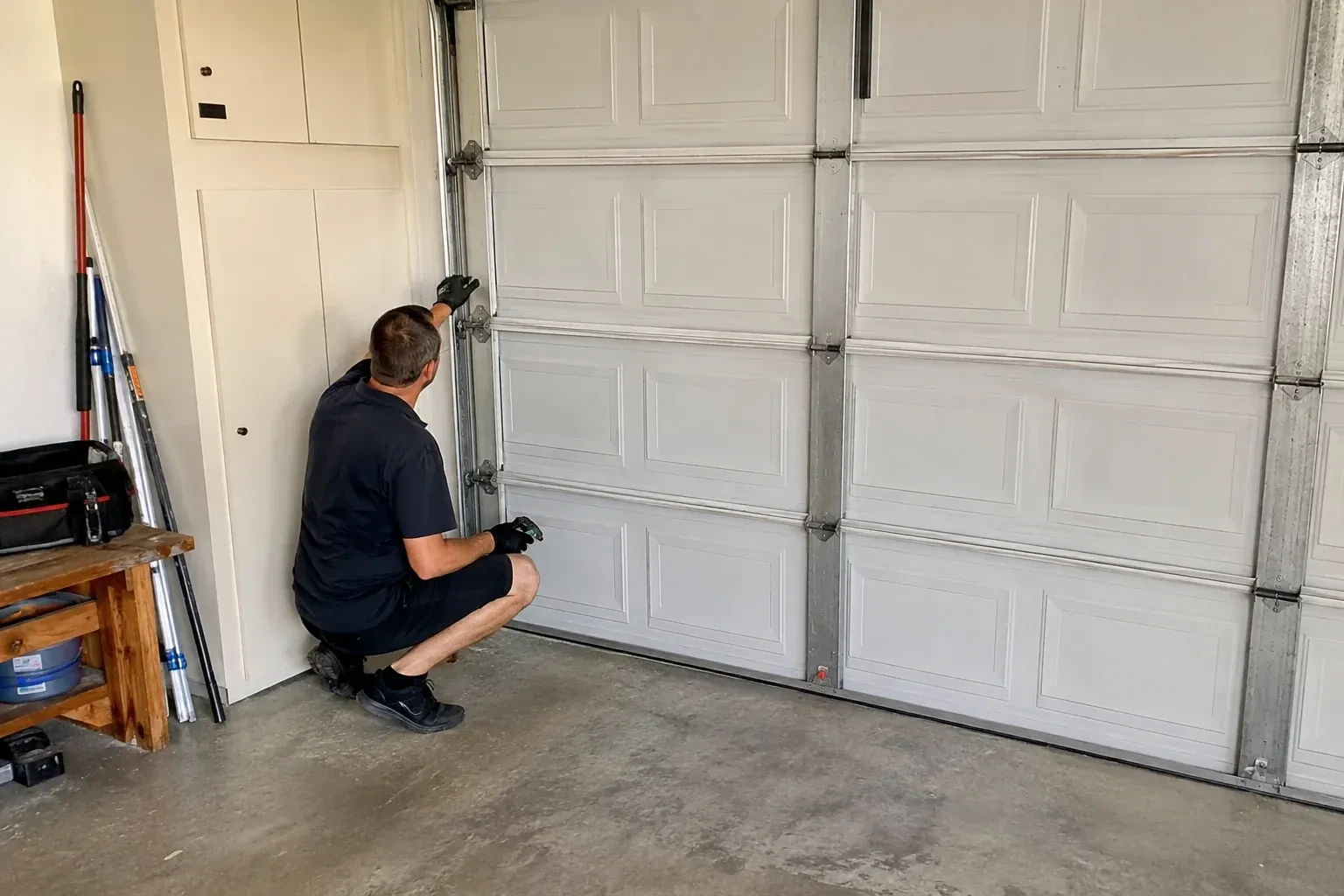
Sound familiar?Toronto
- The call
- You pulled the red cord to lift the door by hand during a power cut and it felt like lifting a car. The opener has been doing all the work and grumbling about it, and you are not sure how long that can go on.
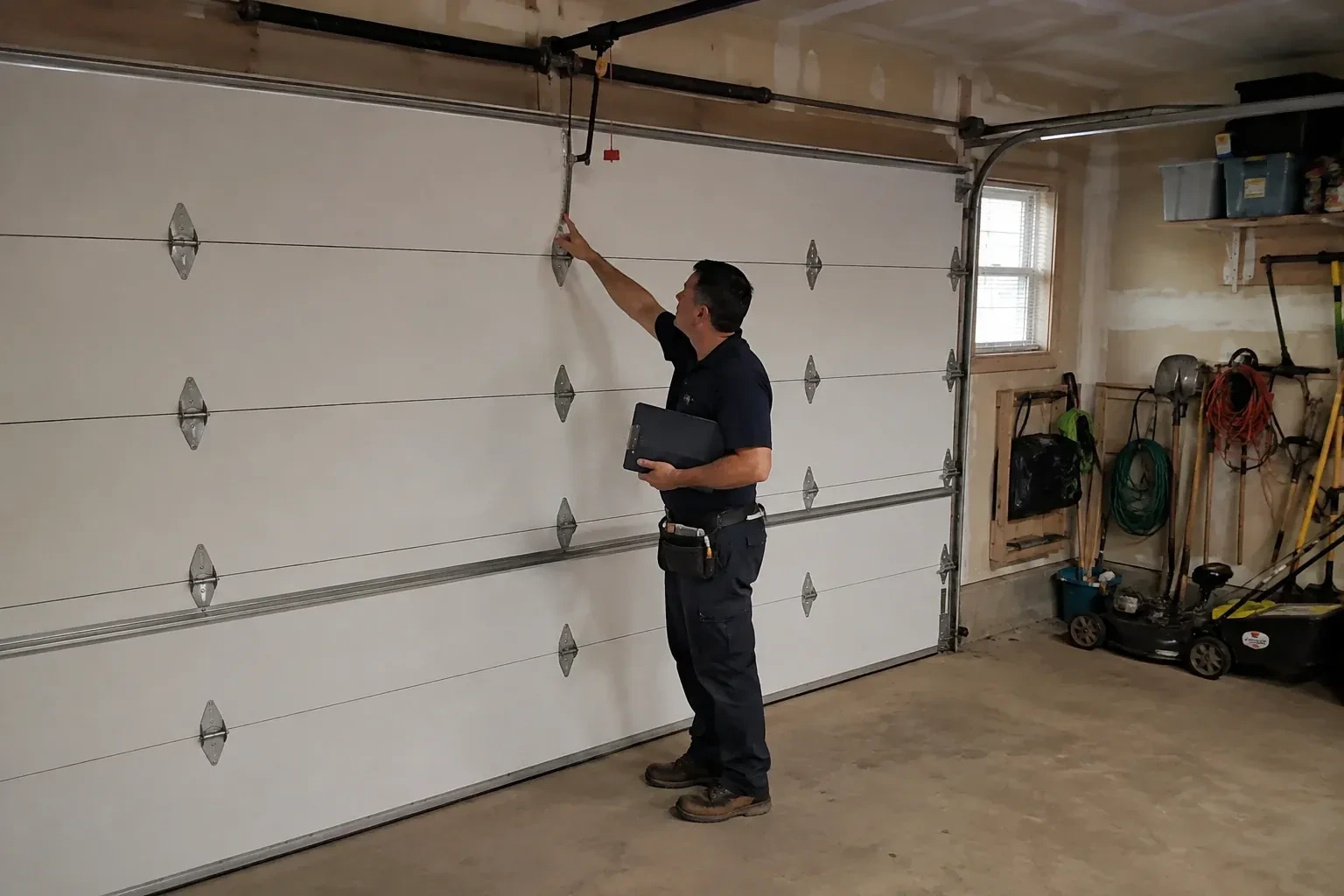
You pulled the red cord to lift the door by hand during a power cut and it felt like lifting a car. The opener has been doing all the work and grumbling about it, and you are not sure how long that can go on.
A noisy garage door is a door asking for a small amount of attention. Squeaks usually come from dry hinge pins and roller bearings. A rattle is often a hinge screw or track bolt that vibration has backed out. A grinding or popping sound can be a roller worn out of round, or a chain slapping the opener rail. A tune-up goes through these one at a time, tightening, lubricating and adjusting, and separates the sounds that maintenance settles from the ones that point to a worn part. The result is a door your neighbours stop noticing, and a clear list if something needs replacing.
Sound familiar?Toronto
Garage Door Tune-Up · Toronto
Scene 1
The bottom seal is checked along its whole length for tears, flattening and stiffness, and the threshold is looked at for the low spots where water pools and freezes. The jamb and header weatherstrip are pressed to see whether the rubber or vinyl still flexes or has gone hard, and the technician notes any daylight showing when the door is closed. Because the opener's travel limit decides how firmly the door presses onto its seal, the two are read together: a crushed seal often means the down limit is set too far, and a gap often means the door is stopping early. This part of the check matters most before winter.
Scene 2
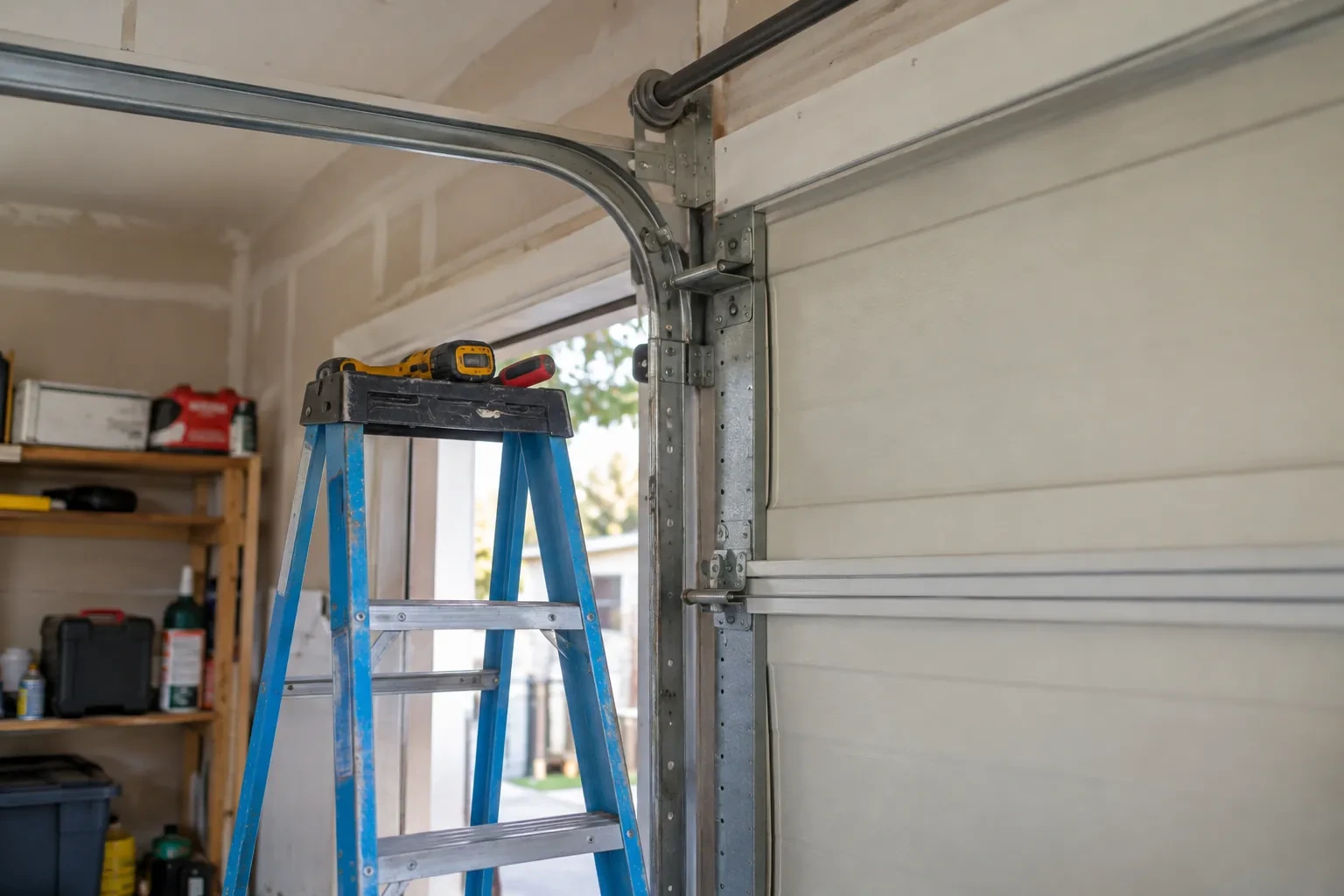
A few minutes of fine adjustment often change the character of a door. A vertical track that has crept inward is eased back so the rollers run in the centre of the channel. A horizontal track that has sagged on its hanger is brought level so the door does not drop into the curve. A strut on a wide top section is checked and tightened so the panel stops flexing when the opener pulls on it. The lock bar is aligned with its slot, or disabled on an opener-driven door so it can never be engaged against the motor. None of these are repairs; they are corrections that let the existing parts work as designed.
Scene 3
How soon the door wants another visit depends on how hard it works. A door that cycles a few times a day, in an attached garage that sees salt, snow and meltwater every winter, does well with a tune-up once a year, usually in the fall before the cold arrives. A lightly used door in a detached garage can often go longer, with the monthly reversal tests and a little lubricant from you in between. The written record is your guide: if it lists parts to watch, the next visit checks those first; if everything was healthy, the interval can stretch. The technician will suggest a timing that fits your door rather than a blanket schedule.
What shapes the quoteRouge Valley Garage Door Co.
FeesSame any hour
Two tests, once a month. With the door open, press close and wave a broom handle through the photo-eye beam near the floor: the door should stop and go back up. Next, set a 2x4 flat on the concrete in the middle of the opening and press close: the door must reverse when it meets the board. If it stops on the board without reversing, the down travel or force setting needs adjustment, and if it fails after that, book a visit.
A full cycle observed before any work, a hands-on inspection of hinges, rollers, tracks, springs, cables, drums, brackets and the opener's attachments, tightening of the accessible fasteners, lubrication of the moving points with a garage door lubricant, a balance check with the door disconnected from the opener, adjustment of the opener's travel and force, cleaning and alignment of the photo-eyes, both reversal tests, a look at the seals, and a written record of the findings.
No. Tracks should be clean and dry. Rollers are meant to roll along the track on their own bearings, and a film of lubricant on the track collects grit, thickens in the cold and makes the rollers slide and drag instead. Wipe the tracks with a rag and put the lubricant where it belongs: on the hinge pins, the roller bearings, the spring coils and the bearing plates at the ends of the torsion shaft.
TorontoOntario
Garage Door Tune-Up · Agincourt, Agincourt North, Clarks Corners, Sullivan, Tam O'Shanter
Every square is one home in a hundred.
On-site assessment
You pulled the red cord to lift the door by hand during a power cut and it felt like lifting a car.
(289) 806-3304, open 24/7.
On-site assessment preferred · (289) 806-3304, open 24/7