Sound familiar?Toronto
- The call
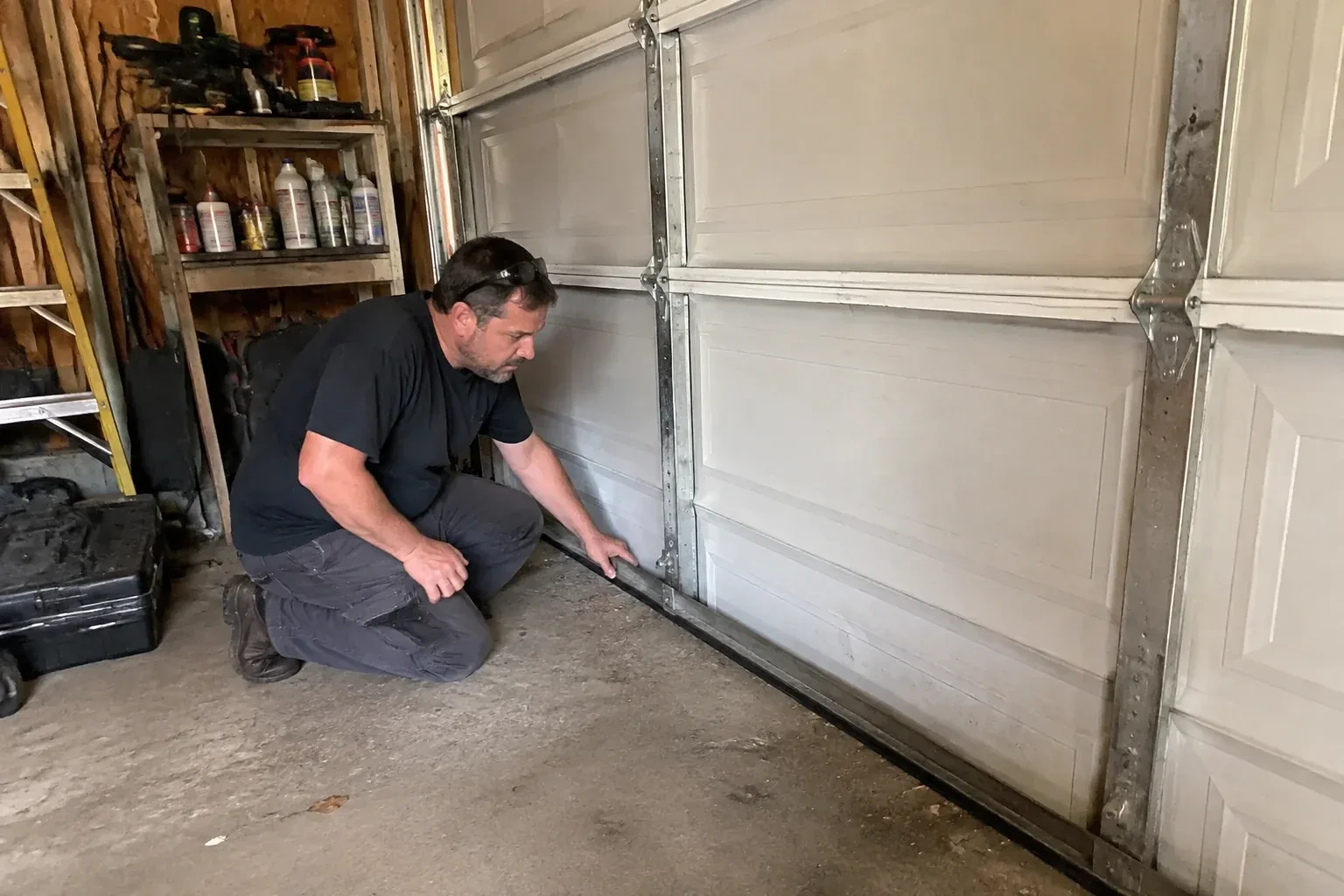
- There was a sharp crack from the garage, and when you went to look the door had dropped on one side and jammed. A length of cable lies coiled on the floor by the bottom roller.
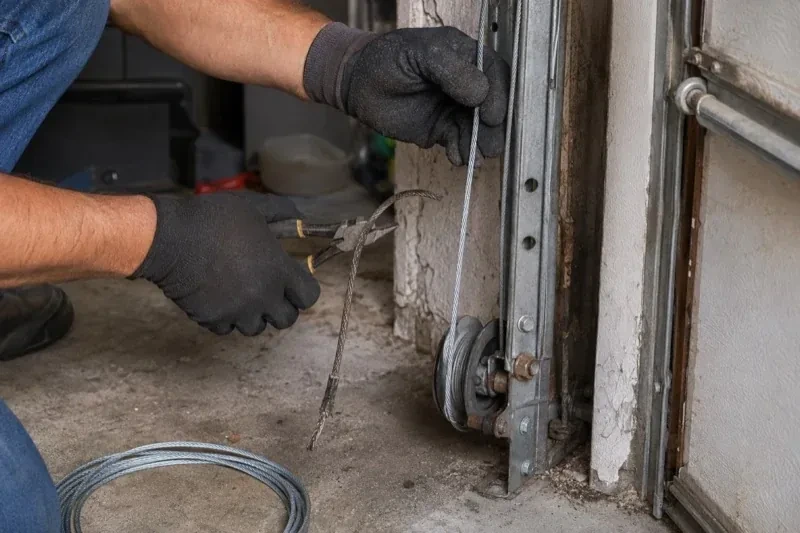
After years of slushy winters the cables look thinner near the bottom brackets, with rust streaks running down the door where they attach. The door still works, but the frayed wires catch your glove when you brush past.
Garage door cables carry the weight of the door as tension held by the springs, which is why the work follows a careful, well-rehearsed sequence rather than simply hooking a cable back on. On a torsion system the technician clamps the door, disconnects the opener and unloads the springs with winding bars before any cable, drum or bracket is touched; on an extension system the door is instead raised fully and clamped so its pulley-mounted springs relax. Once the system is unloaded, replacing the cables is straightforward: the correct length is set, and the counterbalance is tensioned and locked off by the method that system calls for.
Sound familiar?Toronto
Garage Door Cable Replacement · Toronto
Scene 1
A new cable fitted onto the same problem does not last, so the technician wants the cause. Frayed wires along the length point to rubbing against a bent track or a rough drum. Rust at the loop points to slush at the floor. A cable that jumped its drum usually follows the door closing on something, a spring that has lost tension, or a drum that slipped. A snapped cable on a door that was level beforehand often means age and corrosion rather than misalignment. You will be asked what happened before the failure, because a shovel in the opening or a bump from the car is a fact only you can supply.
Scene 2
With the springs wound and the clamps off, the technician lifts the door by hand. It should rise with light effort, hold still at roughly waist height, and settle to the floor without slamming; that is the balance test, and the spring turns are adjusted until it passes. The door is run through several full cycles by hand while the cables are watched on the drums. Then the opener is reconnected, its travel limits and force settings are checked against the newly balanced door, and the reversing test with a block under the door and the photo-eye test are carried out. You see each of these done.
Scene 3
A few minutes with a can of garage-door lubricant twice a year keeps the whole system easy on the new cables. Spray the torsion spring lightly along its length, the hinge pins, the roller stems and bearings, and the bottom bracket pins, then run the door a few times to spread it. A light mist on the cables themselves slows rust; heavy grease is avoided because it holds grit and moisture. The tracks are left dry and simply wiped clean, since lubricant there collects dirt and lets rollers slide instead of roll. Silicone or a lithium spray made for doors is the right product.
What shapes the quoteRouge Valley Garage Door Co.
FeesSame any hour
A light film, yes. A mist of silicone or a lubricant made for garage doors on the cables, especially the lowest stretch near the brackets, sheds moisture and slows rust. Avoid heavy grease or oil, which holds grit and salt against the strands. The springs, hinges, roller bearings and bracket pins take the same product a couple of times a year, and the tracks are simply wiped clean.
Cables tend to live about as long as the springs they work with, often ten years or more on a door used a few times a day, and less on a door that sees heavy use or a wet, salty floor every winter. Rather than a calendar, watch the condition: fraying, rust near the loop or a slack side are the signs the set is due.
Leave it. With one cable slack the door is being carried on one side only, so it is unbalanced and may bind or drop unevenly when moved. The technician arrives with clamps and a method for taking the door's weight before anything is moved, and that is the moment to lift it. Until then a stationary door is exactly what you want.
TorontoOntario
Garage Door Cable Replacement · Agincourt, Agincourt North, Clarks Corners, Sullivan, Tam O'Shanter
Every square is one home in a hundred.
On-site assessment
After years of slushy winters the cables look thinner near the bottom brackets, with rust streaks running down the door where they attach.
(289) 806-3304, open 24/7.
On-site assessment preferred · (289) 806-3304, open 24/7